
Last updated November 17, 2026








Free written scope consultation - allowances, timeline, and change-order rules on paper before a single trade is scheduled
Construction Warning Signs: An Irving Homeowner’s Reference Guide
That hairline crack above your door frame and a $12,000 foundation repair are usually separated by about 18 months of Irving summers. The crack itself isn’t the expensive part. The expensive part is not knowing what its shape, direction, and timing are telling you. Most warning-sign guides describe problems after they’re obvious. This one is built around the early, easy-to-miss signals we see in the year or two before a homeowner calls for help, organized by where in the house they show up and what they typically mean given Irving’s clay soil and flat lots.
Quick Answer
The early warning signs of construction trouble in an Irving home are small vertical or stair-step cracks at corners and brick joints, doors that suddenly stick in one season but not the other, water staining low on interior walls near the slab, and mortar cracks that grow over a few dry months. Cosmetic cracks shrink and stay put. Structural movement cracks grow, repeat in the same pattern, and usually come with a door or window that won’t latch. Track what you see with photos and dates before you spend anything.
Styles & brands we work with
- Kitchen remodeling
- Bathroom remodeling
- Home additions & ADU
- Roofing
- Windows & doors
- Driveway & pavers
- Fence
Table of Contents
- Cosmetic Cracks vs. Structural Cracks in an Irving Slab Home
- Water Intrusion Signs Specific to Irving’s Flat Lots
- Door and Window Binding as a Diagnostic Tool
- Exterior Signs on Brick and Stucco That Show Up First
- The Contractor Behaviors That Are Warning Signs
- What Irving’s Clay Soil Actually Does to a Foundation
- How to Photograph and Track a Warning Sign
- Common Mistakes to Avoid
Cosmetic Cracks vs. Structural Cracks in an Irving Slab Home
Most Irving homes sit on slab-on-grade foundations, which means the concrete and the structure above it move together and telegraph that movement into the drywall and brick. A crack is a messenger, not a diagnosis. The pattern is the diagnosis.
Here’s how we tell them apart on a walkthrough:
- Cosmetic shrinkage cracks: hairline width (under 1/16 inch, roughly the edge of a dime), vertical, located mid-wall, and stable across seasons. They show up as the home’s framing lumber dries out and the plaster or drywall cures. Most homes in Valley Ranch and Las Colinas will have a handful within a few years of construction. They don’t grow.
- Structural movement cracks: wider than 1/8 inch, diagonal, radiating from the corners of door and window openings, and repeating in the same place. A crack that starts at a window corner and runs toward the ceiling is the pattern we watch most closely, because it usually means one side of the opening is lifting or dropping relative to the other.
- Stair-step cracks: these step up through mortar joints in a brick wall or block foundation. They almost always trace a foundation differential (one part of the slab settling more than the next).
The other test is time. A crack that’s the same width in March and September is acting like shrinkage. A crack that widens in the dry months and closes in the wet months is reacting to soil movement. Take a photo the day you notice it, write the date and month on a piece of masking tape next to it, and photograph it again every 60 days. Two seasons of photos tell you more than any single inspection. If you’re weighing a bigger remodel around that house, our general contractor in Irving team can fold a movement assessment into the plan before anything gets demolished.
Water Intrusion Signs Specific to Irving’s Flat Lots
Irving’s lots are famously flat. Flat ground drains slowly, and when the soil is the black clay that dominates much of Dallas County, water sits on top of it before it soaks in. That combination turns water intrusion into a seasonally predictable problem, which is useful: what you see and when you see it tells you where it’s coming from.
Low interior staining: a water mark low on a wall, at or just above the baseboard line, usually points to water wicking up through the slab edge or coming in under a wall plate. In Irving we see this most on the slab-facing walls of single-story homes on the older streets between MacArthur Boulevard and the old downtown core.
Staining that appears only after heavy rain: a stain that shows up 6 to 24 hours after a summer storm and fades as things dry is a drainage problem, not a plumbing leak. It’s telling you runoff is pooling against the wall. Look for the inlet: a flower bed graded toward the house, a downspout that dumps within 12 inches of the slab, or an AC condensate line that empties in the wrong direction.
Staining that shows up year-round: steady staining on an interior wall that never dries out usually points to a supply or drain leak inside the wall or under the slab. That’s a plumber’s scope issue before it’s a construction issue.
Ceiling rings under upstairs bathrooms: a brown ring on first-floor ceiling drywall, especially near a bathroom or laundry above, means moisture is tracking along a joist or subfloor. Get it looked at within weeks, not months; drywall and framing both fail faster once they stay wet.
Part of what makes Penhallow Remodeling Irving worth a call during a remodel is we photograph every wall cavity we open, so if we find a slow leak behind the tile or under a window, you get a dated record of it before any repair is priced.
Door and Window Binding as a Diagnostic Tool
A door that drags is one of the most reliable early signals a homeowner will ever get, and it’s free to check. The trick is figuring out which doors bind first and when.
When soil movement is the cause: the binding is seasonal and hits the doors closest to the exterior first, on the “low” side of the house. It comes on over a few weeks, usually in the driest stretch of July and August, and loosens up in fall. It’s often paired with a window that won’t lock the same week. If two or three doors on the same side of the house change at once, that’s soil movement, because framing settles gradually rather than in a single season.
When framing or a hinge is the cause: the binding is constant across seasons and hits one door, not a group. The door may rub at the top in one corner and the bottom in the other, which usually means the frame went out of square during construction or a hinge is loose. It doesn’t move with the weather.
When it’s a settling issue from a recent build: in a home less than two years old, mild seasonal binding is common almost everywhere in Irving. New framing shrinks and moves as it equalizes. What matters is whether it returns to normal in a month, or whether it walks over to the next door.
A useful, low-tech test: open the door halfway and let it go. If it swings shut on its own, the floor under it is likely tilting. That doesn’t mean the house is failing, but it’s worth measuring and photographing the gap between the door and the frame at the top and sides. Note whether the gap is even or tapers. If you’re preparing to replace door units, a reputable door line like Therma-Tru will still let an out-of-square opening show through, so that same measurement matters for the purchase, not just the diagnosis.
Exterior Signs on Brick and Stucco That Show Up First
Exterior warning signs almost always show up before interior ones. Water gets behind brick and stucco from the outside, and that damage takes weeks to reach the drywall. If you know what to look for, the brick wall is your early warning system.
- Look at the mortar joints, not the brick. Hairline cracks in the joint between two bricks are common and usually cosmetic. A stair-step crack that follows the joint up through three or more courses, in a diagonal pattern, is a different animal entirely.
- Check the corners first. Corner cracks are the most common early pattern. Photograph any crack at a corner with a coin or a tape measure in the frame so the width is measured, not guessed.
- Look for efflorescence. That white, chalky residue on brick is salt left behind when water evaporates out of the masonry. It’s not damaging by itself, but it’s the only visible sign that water is passing through the wall, and it tells you where.
- Inspect around every window head and sill. Water finds failed sealant, a sill without a good drip edge, and a gap between a window unit and the surrounding brick. When we replace windows, we choose a frame with a proper nailing fin and flashing detail (Therma-Tru and Mr-Glass units are common choices for Irving homes), because the window itself is rarely the leak; the flashing around it usually is.
- On stucco, look for a crack that runs vertically, or a stucco patch that’s gone soft. A crack along a vertical line often marks a joint between framing sections. A stucco surface that’s loose or hollow-sounding is telling you water has gotten behind it.
Photograph everything with a date and a location (front corner, southwest of the garage). If you ever need a contractor’s eyes on it, that file is worth five minutes of a professional’s time before either of you climbs a ladder.
The Contractor Behaviors That Are Warning Signs
The most expensive defects in a remodel are rarely physical ones. They’re procedural, and they show up before the first cabinet comes out. We’ve watched these patterns enough times to treat them with the same urgency as a structural crack:
- No written price. If the number you’re given is verbal, or described as a “ballpark” that will be firmed up after demo, the number you heard is not a promise. Every project at Penhallow gets a written price before any work starts, and the number on day one is the number on the invoice.
- Scope changes mid-job without a written change order. A contractor who moves walls or adds work in a conversation and hands you a different invoice later is telling you how the whole job will be handled. Ask for a written change order before the service starts, every time.
- No permit pulled. In Irving, most significant remodels require a permit, and skipping it can complicate resale and insurance. A written proposal that says “no permit needed” for a project that touches framing, electrical or plumbing is a warning sign about how the contractor does paperwork. We pull permits on the scope that needs one, and inspections are part of the schedule.
- No written guarantee. Ask, in plain terms: How long does the guarantee last, what does it cover, and what happens if something fails? If you can’t get an answer in writing, you’re not getting a guarantee.
- No arrival window. A contractor who can’t tell you when the crew will be there isn’t managing their schedule, and you’ll spend weeks chasing them. The Kingswell Way puts it simply: say the price before the work, show up in the window you gave, and leave the place cleaner than you found it.
- No live person answering. If you can’t reach anyone quickly on a non-emergency question, imagine reaching them about a failed repair. Our phone is answered by a live person, not a voicemail prompt.
These behaviors predict defects more reliably than any inspection report, because a contractor running a clean process tends to build a clean project.
What Irving’s Clay Soil Actually Does to a Foundation
Most of the soil under an Irving slab is expansive clay (Texas blackland soil is a common overburden). “Expansive” means it swells when wet and shrinks when dry, and it can move a surprising amount between a wet spring and a dry August. That movement isn’t unique to Irving, but the flat lots and hot summers here make it more pronounced than in most of the country. A home builder’s foundation is engineered for a range of that movement; a summer drought is the test.
What that means for you in practice:
- Watering a foundation line during a dry spell, gently and consistently, is a real safeguard – not a myth. It keeps the clay from shrinking away from the slab edge. But it also means the same clay can’t be happily expanded back without some care. Slow and steady, not a flood.
- Roof and gutter runoff must run away from the house. In Irving’s flat yards, water finds a way to stand against the slab. Grading that slopes the ground away from the house, plus downspouts that empty well away from the foundation, do more for the slab than almost anything else.
- Tree roots matter more than most people expect. A large oak within 10 to 15 feet of the foundation pulls water out of the clay and causes differential movement. A root barrier or a simple watering practice is worth more than a repair.
If a remodel is on the horizon and you’re seeing movement, our kitchen remodeling in Irving and bathroom remodeling in Irving projects both start with an evaluation of the floor and wall plane before we remove cabinets or tile, because a bathroom floor that’s already out of level will make a new tile job look wrong no matter how careful the crew is.
How to Photograph and Track a Warning Sign
You don’t need a professional for the tracking part. Anyone with a smartphone can build a useful record in under 10 minutes.
- Lay a tape measure or a coin flat next to the crack and photograph it straight on, not at an angle. That gives anyone who looks at it later a scale reference.
- Photograph the whole wall first, then the crack close up. One shot for context, one for detail.
- Write the date and the location (e.g., “guest bath, above door, 08/14”) on a sticky note and include it in the photo frame.
- Repeat every 60 days, and after any unusually wet or dry stretch. Compare the measured width in the photos.
- Keep a simple two-column list on your phone: date and one observation. If a crack moved from “pencil lead thickness” to “clearly a quarter inch,” that’s a pattern, not a moment.
- Photograph the surrounding context once a season: the brick corner, the door frame, the corner of the room. Movement rarely shows up in one place alone.
Bring that file to any contractor you’re considering. When a homeowner hands us a dated record, we can usually tell in 15 minutes whether it’s worth a closer look. Our technicians have up to 22 years of experience, and the pattern of a crack from month to month is often the most useful thing they see, more so than any single inspection.
Common Mistakes to Avoid
- Patching a growing crack and assuming it’s fixed. Paint or caulk hides the measurement, not the movement. If the crack returns within one hot season, you haven’t solved the underlying thing.
- Waiting for a flood before investigating water stains. In Irving’s flat lots, a stain that appears after a rainstorm is usually the first warning. The leak is often a downspout, a garden bed graded toward the house, or a failed flashing, all of which are cheaper to fix before drywall and framing get wet.
- Treating a seasonal door bind as a hinge problem. If two doors on the same side of the house stop latching the same month, the hinge is fine – the floor is moving. Look for the soil cause first.
- Accepting a verbal estimate. The single most expensive thing in a remodel is the number that changes. Ask for a written price before work starts, and compare the written number from one contractor to the written number from another.
- Skipping the permit to save a few hundred dollars. Permits are the record that the work was done to code, and inspections catch things that a homeowner can’t. The savings are usually less than the cost of dealing with the unpermitted work at resale.
- Choosing on price alone. The lowest bid in a remodel is often the bid for the smallest scope. Look at the written scope next to the written price, and check what the guarantee covers.
- Not asking how the guarantee works before signing. A guarantee that isn’t written isn’t a guarantee. Ask how long it lasts, what triggers a return visit, and whether there’s a charge for the second visit. There shouldn’t be.
See the difference
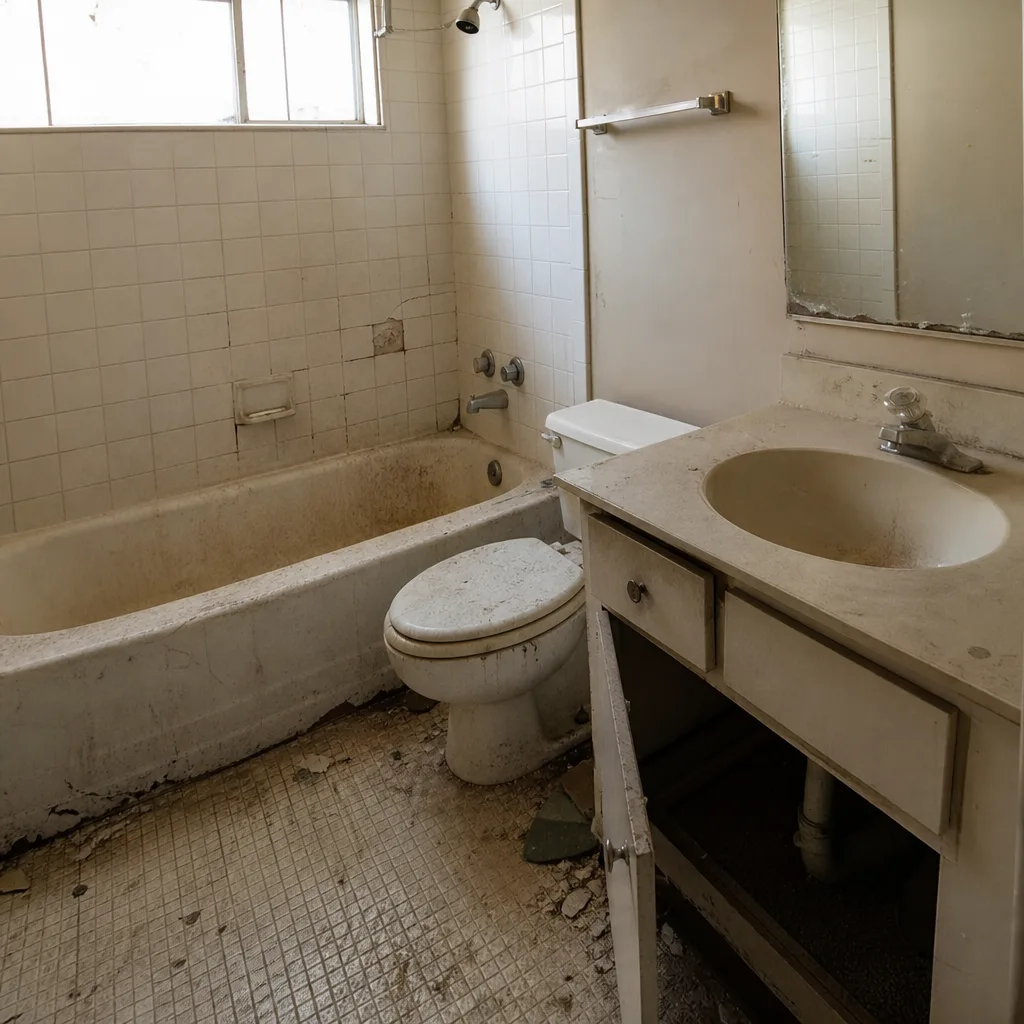 Before
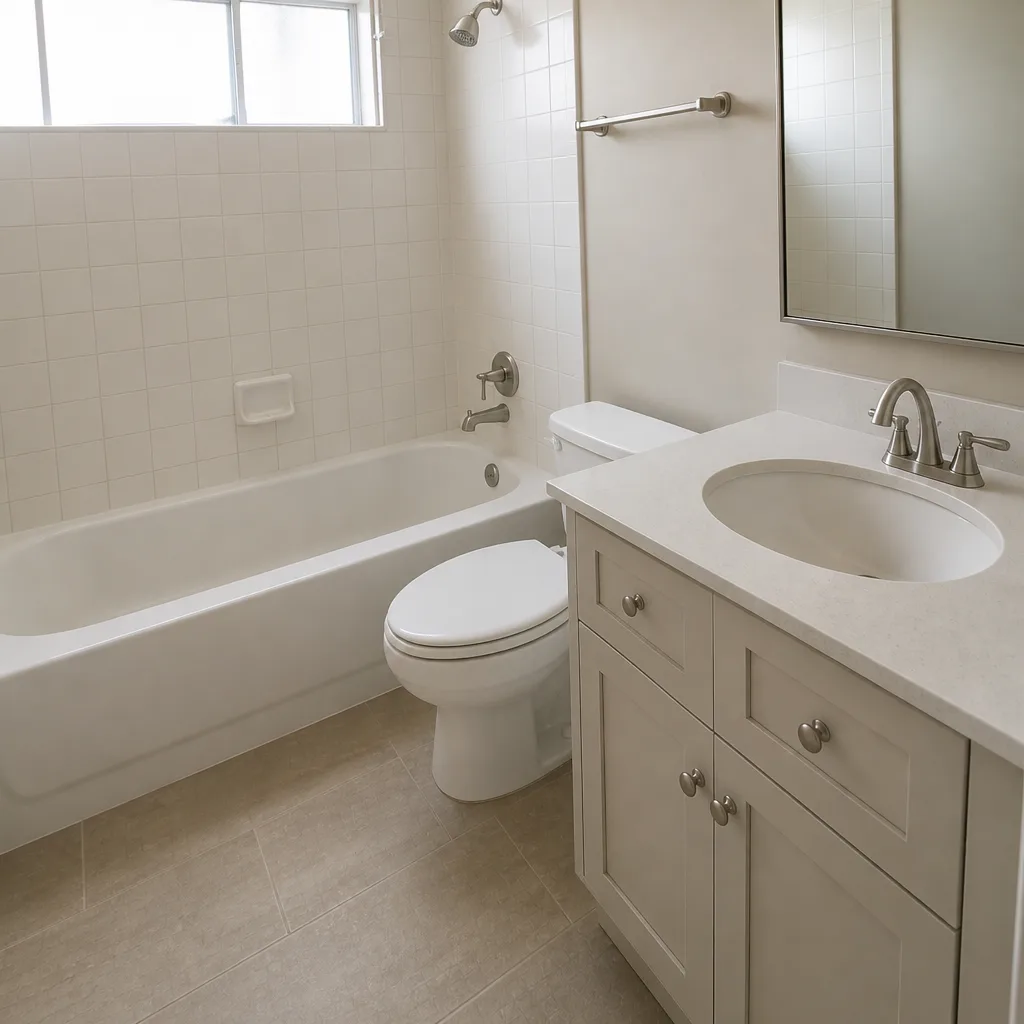 After
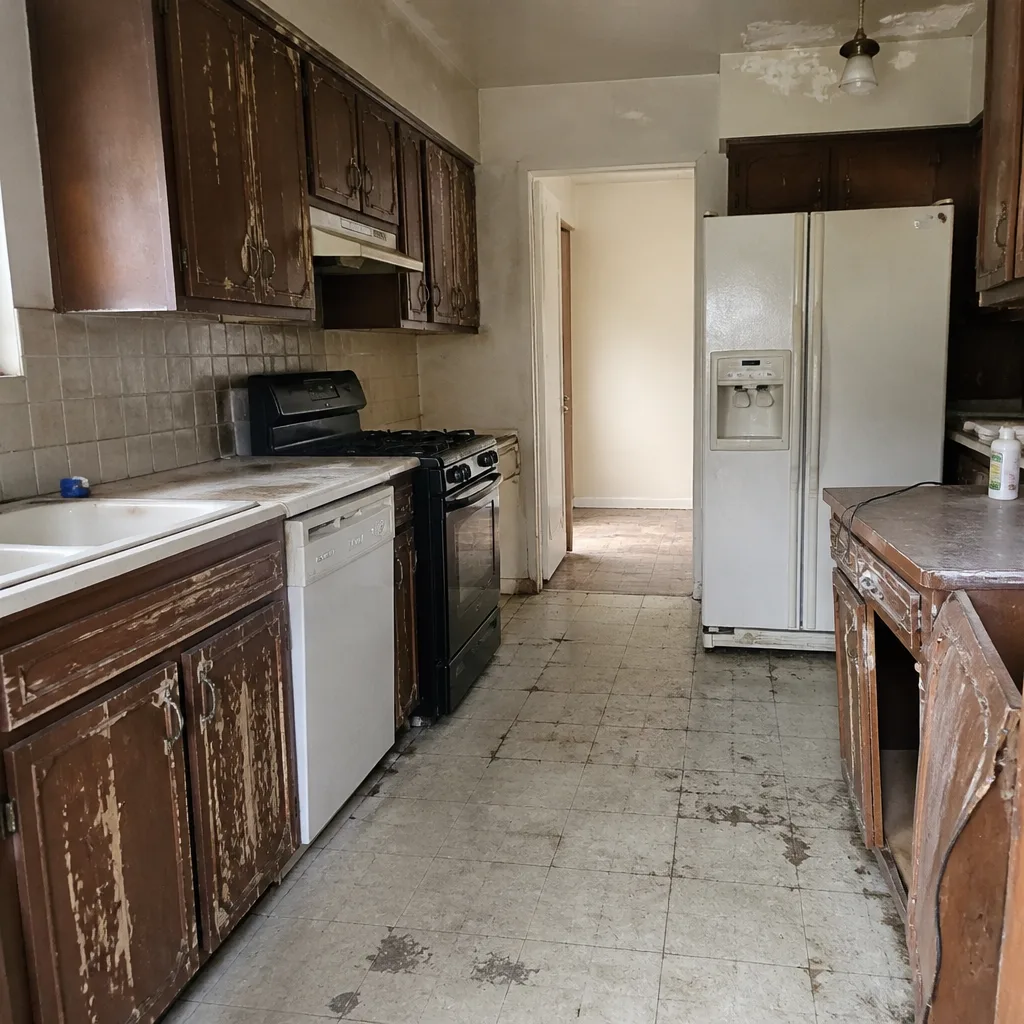 Before
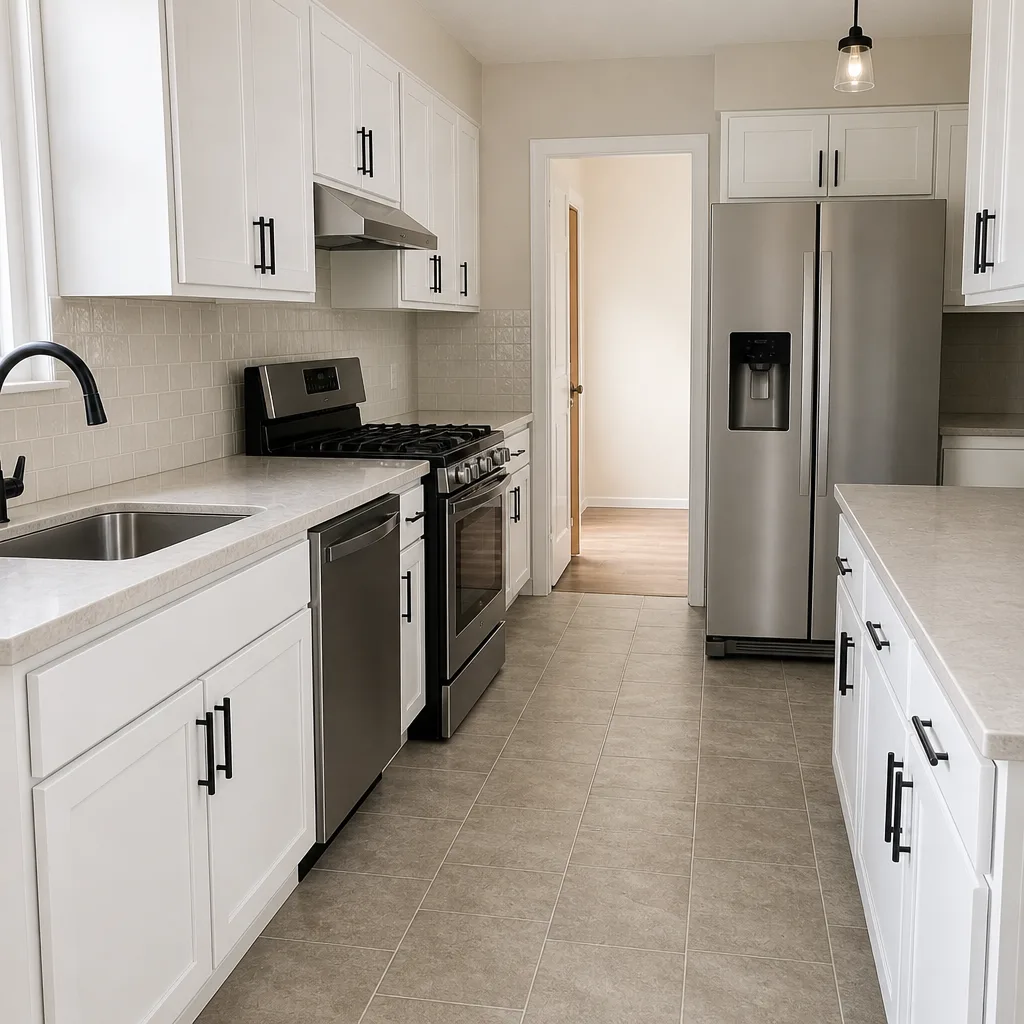 After
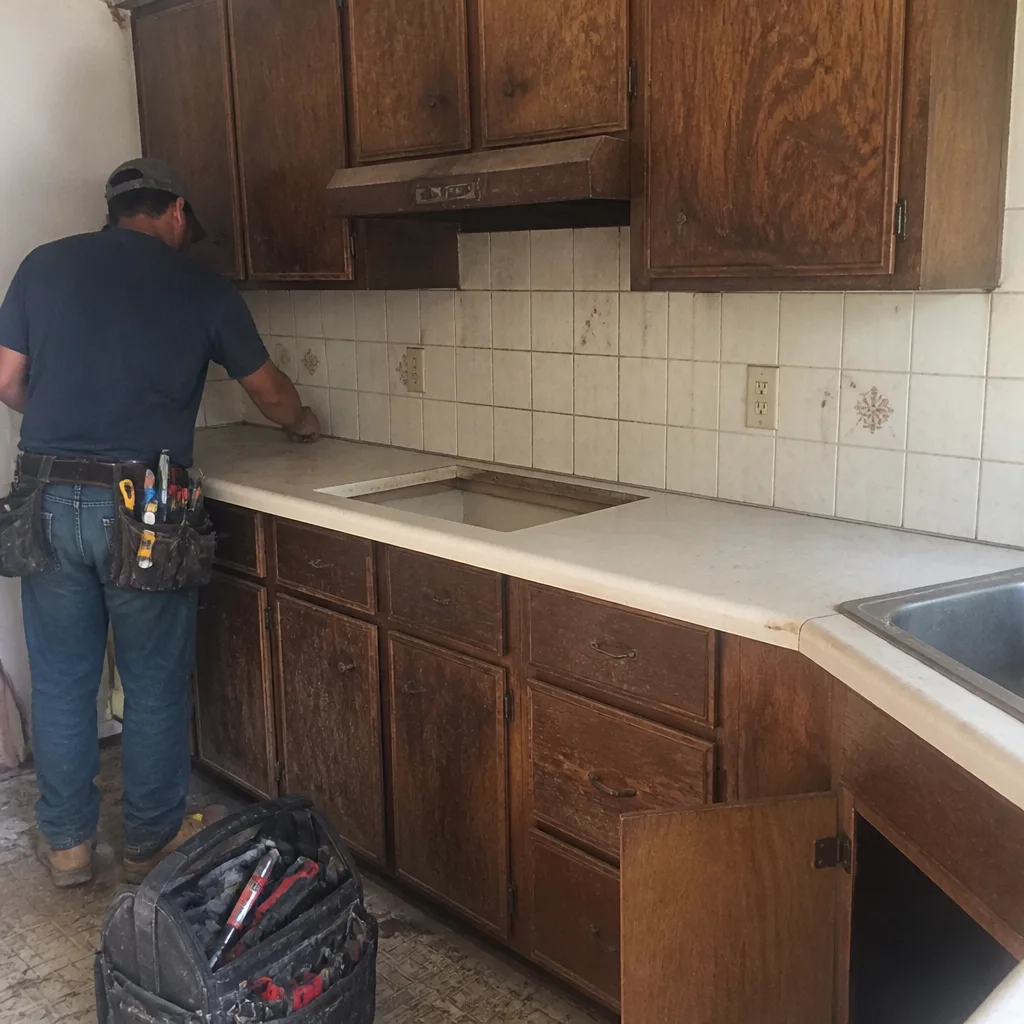 Before
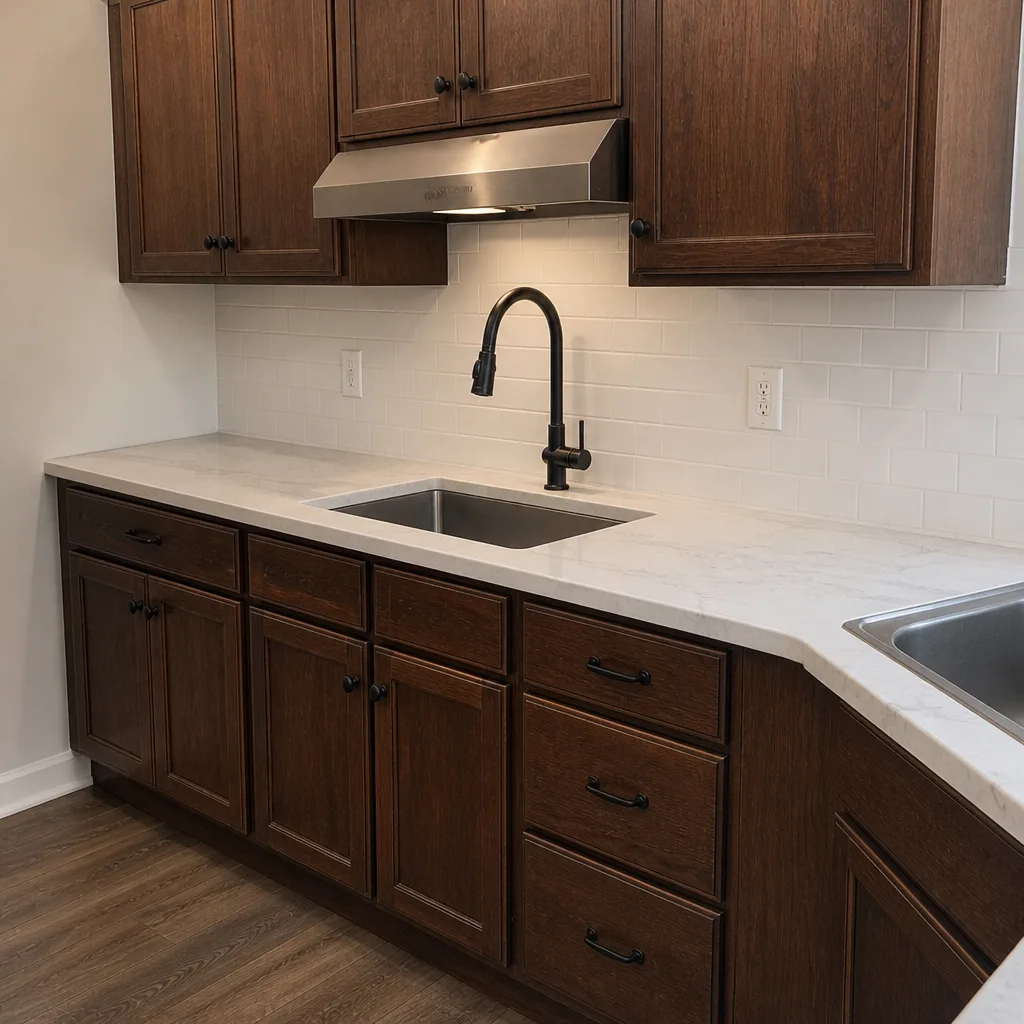 After
When to Call a Professional
Call when a crack is wider than a pencil lead, when a stair-step mortar crack has grown past three courses, when two doors on the same side of the house bind within one season, or when water staining appears low on a wall and stays. None of these are reasons to panic, and none of them require a full remodel. They’re reasons to get a trained eye on the pattern while it’s still cheap to deal with. We’ve seen the same pattern enough times across Irving’s neighborhoods to know what matters and what doesn’t. Penhallow Remodeling Irving offers free estimates in Irving for repair, remodel or a second opinion on a sign you’re tracking; call (844) 320-5939 to schedule one, and you’ll get a written price and a written guarantee before any work starts. If a repair fails inside the guarantee period, we come back at no charge.
Frequently Asked Questions
A cosmetic crack is under 1/16 inch wide, vertical, mid-wall, and stays the same size from season to season. A structural warning crack is 1/8 inch or wider, diagonal, travels from the corner of a door or window, and changes width between dry and wet months. If you’re unsure, photograph it with a measure next to it and track it for 60 days. Call (844) 320-5939 for a free evaluation if it’s growing.
Seasonal binding usually means the clay soil under and around the slab is shrinking and swelling with the weather, and the door closest to the exterior on the low side of the house moves first. Framing issues look different: a single door binds year-round and doesn’t recover in the wet season. If three doors on the same side of the house bind in the same month, get it looked at.
Low staining on interior drywall usually points to water wicking up through the slab edge or entering under the wall plate, and it’s common on the slab-facing walls of single-story homes. If the stain only shows up after heavy rain, suspect runoff pooling against the house. If it’s there year-round, check the plumbing first. Call (844) 320-5939 for a free estimate on the repair once the source is confirmed.
Yes, when the scope requires one, we pull the permit and the inspections are built into the schedule. We’ll tell you up front which parts of your Irving project need a permit and which don’t, and we won’t skip the ones that do.
Usually because the verbal number never had a written scope behind it, so the “extras” that come up after demo can be priced however the contractor likes. We put the price in writing before any work starts, so the number on day one is the number on the invoice. Call (844) 320-5939 for a written estimate on your Irving project.
We come back and fix it at no charge under the 365-Day Done Right Promise, and the free second visit if a repair fails is included – no service call, no re-inspection fee. Every written guarantee lists exactly what’s covered and how long it lasts, and you’ll have it before work starts.
The Bottom Line

The typical early warning sign in an Irving home is small, repeatable, and shows up in the same place over two seasons. A haircrack that widens, a door that binds on the same side of the house, a mortar stair-step that appears after a hard rain, and a water stain low on a wall are all things you can track with your phone before they cost anything to fix. The other warning signs are procedural: no written price, no permit, no written guarantee. Watch the pattern, track it with dates, and call a professional when the pattern stops being a coincidence – that’s the difference between a small repair and the $12,000 version an 18-month wait can create. Call (844) 320-5939 to schedule your free estimate with Penhallow Remodeling Irving.
Written by the team at Penhallow Remodeling Irving.