
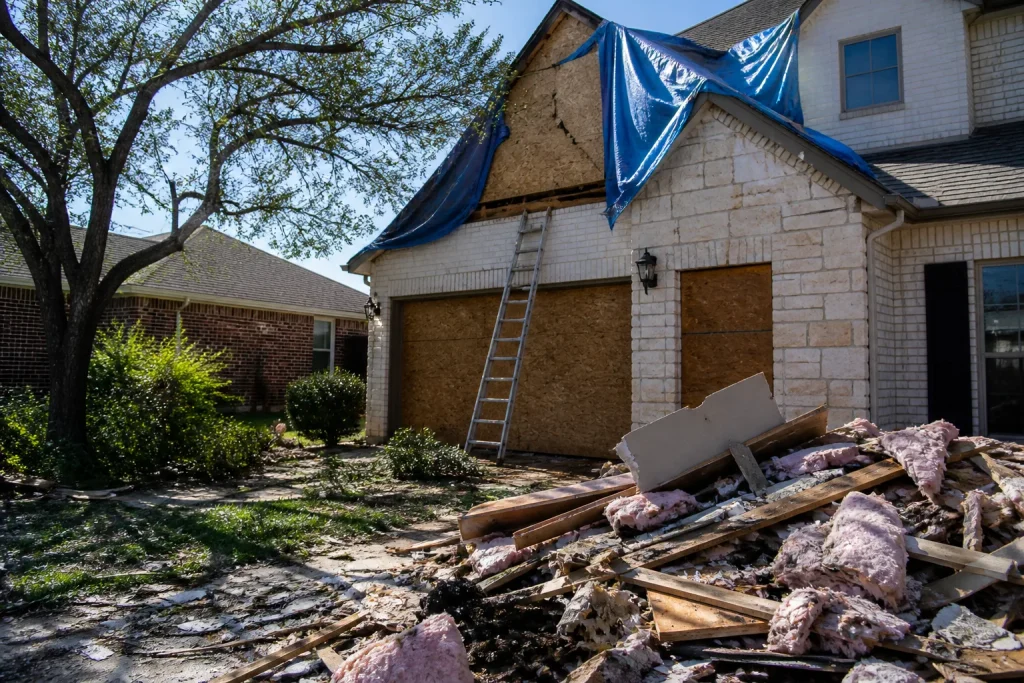
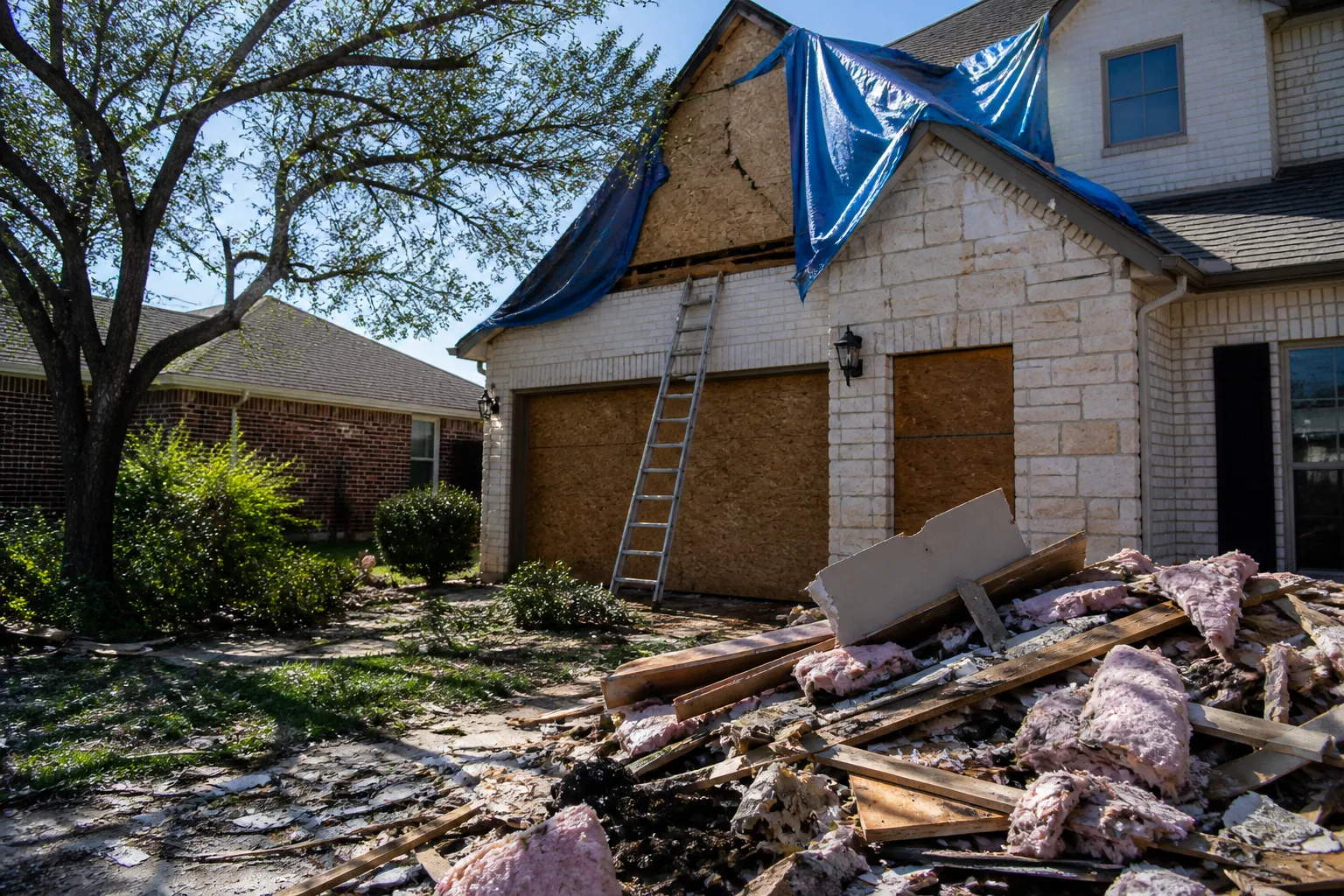
Emergency General Contractor Near Me: What Irving Homeowners Should Do First
After a burst pipe floods a bathroom or a storm caves in a soffit, most Irving homeowners make four phone calls in the wrong order and hand the first contractor who shows up a check without a single thing in writing. The stress is real, and so is the cost of getting the sequence wrong. Here’s the calm version: call your insurance first, start mitigation second, document everything third, and hire the contractor fourth. That order protects your wallet as much as your drywall. If you’d rather not sort it out alone, call (844) 320-5939 and a real person will pick up.
Why the order of your phone calls matters so much

Insurance is a contract about timing. Most policies require you to report damage “promptly,” and a claim adjuster reads the file in the order it was built. Call the contractor first and you’ve created a paper trail that starts with a stranger’s estimate instead of your own record of the damage. That’s a gap an adjuster will notice, and it’s often the difference between a clean payout and a fight.
Here’s the order that protects you, and it holds true whether you’re dealing with a burst pipe in Valley Ranch or hail damage near Las Colinas:
- Insurance first. Open the claim, get a claim number, and ask what they need from you before anyone touches a thing.
- Mitigation second. Stop the bleeding. Shut off water, tarp the roof, pull wet rugs out. This is damage control, not remodeling, and it rarely needs a permit.
- Documentation third. Photograph everything before the cleanup crew finishes, because the wet drywall tells the story the dry drywall can’t.
- Contractor fourth. Hire licensed help for the actual rebuild once the claim is open and the damage is on record.
We’ve seen Irving homeowners get this backwards and lose weeks to a back-and-forth over what was pre-existing and what came from the storm. Starting in the right order costs you nothing and saves you a headache later. If you’ve already made a call out of order, don’t panic. Just build the paper trail now, starting with your own phone photos.
What to document before anyone touches anything
Ten minutes with your phone camera is the cheapest insurance you’ll ever buy. Walk through with the video rolling, narrate what you’re seeing out loud, and don’t clean up a single thing until you’ve captured it. An adjuster would rather see a messy, well-documented scene than a tidy one with no record.
Here’s what we tell every Irving homeowner to capture the moment the water’s shut off or the storm passes:
- A wide shot of each affected room, then a close-up of the damage. Wide then tight, every time.
- The water line on drywall and baseboards, with a tape measure or a coin in frame so the height is obvious.
- Anything that got soaked, laid out before it’s thrown away. Furniture, rugs, documents, electronics.
- Timestamps and date stamps turned on. Your camera already has them; make sure they’re showing.
- The exterior, especially the roof, soffits and gutters, if the damage came from above.
- Receipts for anything you buy to stop the damage. Fans, tarps, a wet-vac rental. Insurance usually reimburses mitigation costs.
A real example: we got called to a home near the Las Colinas canals after a supply line let go under a bathroom sink. The homeowner had already mopped up, bless them, and thrown out the ruined vanity. That thrown-out vanity was the clearest evidence of the damage, and without it the adjuster had to lean on the water stains alone. Next time, photograph the mess before you clean it.
Emergency repair vs. urgent repair: why the difference changes what you sign

Not everything that feels like an emergency actually is one, and knowing the difference changes what you should agree to in writing. An emergency repair is anything actively causing damage right now: water pouring in, a roof open to the sky, a gas smell, a sagging ceiling about to come down. These need attention the same day, no question.
An urgent repair is serious but not bleeding: a cracked window with no rain forecast, a damaged soffit that’s letting air in but not water, a section of ruined drywall in a room that’s already dry. These can wait 24 to 72 hours for a proper written scope and price. Many contractors will tell you everything is an emergency because urgency is how they get you to sign a blank check. Don’t.
Here’s how we sort it on a first call to an Irving home:
- Is water entering right now? Emergency. Stop it, then document.
- Is there a structural or gas hazard? Emergency. Call the utility or fire department first, then us.
- Is the damage stable and dry? Urgent. Take photos, make your calls, and get the scope in writing.
For the rebuild side of the job, this is where a proper general contractor in Irving earns their keep: scoping the repair correctly so a small urgent fix doesn’t turn into a remodel you didn’t budget for. For interior storm damage that reaches a kitchen or a bath, the repair scope often overlaps with kitchen remodeling in Irving or bathroom remodeling in Irving, and it pays to understand both pieces before you sign.
What to insist on in writing, even in an emergency
The one rule that survives every storm: scope, price, and timeline go in writing. Stress is exactly why. When you’re standing in a wet hallway at 9 p.m., you’ll agree to things you’d never sign on a clear-headed Tuesday. A contractor who respects you puts it in writing anyway. A contractor who pressures you to “just get started and we’ll figure out the number” is telling you how the invoice will read.
Insist on these three things before any tool comes out of a truck:
- A written scope. Exactly what’s being repaired, removed, and replaced, in plain language.
- A written price. Not a range, not a verbal ballpark. A number. If the job might grow once drywall comes down, the contingency should be spelled out in writing too.
- A written guarantee. What happens if the repair fails inside the guarantee period. On every Penhallow Remodeling project, that’s our 365-Day Done Right Promise, covered in writing, and if the work fails we come back and fix it at no charge.
The Kingswell standard we operate under puts it plainly: say the price before the work, show up in the window we gave, and leave the place cleaner than we found it. That doesn’t change because it rained. The full explanation of how we run a job lives on our Penhallow Remodeling Irving home page. For storm repair specifically, the products behind the repair matter as much as the labor. When a soffit or a section of siding has to go back on, we lean on James Hardie fiber cement because it holds up to Texas hail and sun far better than the builder-grade alternative, and it carries its own manufacturer warranty alongside ours.
Storm-chaser warning signs specific to the Irving area

North Texas weather brings out the worst in a certain kind of contractor. The hail or wind event passes, and within 48 hours there’s a guy at the door with a clipboard and a magnetic sign on his truck, offering to handle your insurance claim for you. Some of these folks are honest. Plenty aren’t, and the pattern is predictable enough to name.
Watch for these on any post-storm repair in Irving:
- No local address. Out-of-state plates, a PO box, or a “we’re in the area this week” story.
- Surge pricing dressed up as urgency. A price that’s “today only” or jumps when you hesitate. Real demand doesn’t work on countdowns.
- Offers to “handle the claim” or pad the scope. That’s insurance fraud, and it can land on you.
- No written scope, no written price. They’ll “work it out with your adjuster.” Don’t.
- A demand for full payment up front or a check made out to a person instead of a company.
We pulled one out of a garage over in Irving’s Hospital District last week where a homeowner had already been quoted a full roof-and-soffit rebuild for a soffit that needed two boards and some flashing. The scope was four times the job. That’s not a mistake, that’s a business model, and the written-scope rule is how you catch it.
When to call a pro (and when you can wait until morning)
Call a pro the moment water, wind, or structure is doing something you can’t stop with your own two hands. A shut-off valve you can’t find, a ceiling bulging under a leak, a wall that moved: those are calls, not projects. And if you’re not sure, call anyway. A licensed contractor would rather tell you it’s nothing than have you find out at 2 a.m. that it wasn’t.
If the damage is stable, boxed up, and on camera, you can wait for business hours and get proper written scopes and prices. That’s the calm move, and it’s almost always the cheaper one. Our team has up to 22 years of experience reading storm damage and telling the two apart, and a live person answers our line around the clock, so you’re never stuck guessing. Our technicians are background-checked and arrive in uniform, which matters more than people think when a stranger is walking into your home at a stressful moment.
Related services in Irving: for the full rebuild after mitigation, start with our general contractor page, and for a water-damaged bath or kitchen, the bathroom and kitchen remodeling pages spell out what a proper restoration involves and what it runs.
The Bottom Line
The order is everything: insurance, mitigation, documentation, contractor. Ten minutes of phone photos before anyone touches a thing will save you more money than any discount a storm-chaser offers. Insist on a written scope, a written price, and a written guarantee even when you’re stressed, especially when you’re stressed. Getting the sequence right is how Irving homeowners protect themselves from both the damage and the people who show up right after it.
If you’re in Irving and need help sorting storm damage, a burst pipe, or a repair that needs a real scope and a real price, Penhallow Remodeling offers free estimates. Call (844) 320-5939 and a live person answers, day or night.
Frequently Asked Questions
Call your insurance company first. Open the claim and get a claim number before any contractor touches the damage, because your policy requires prompt reporting and a claim that starts with your own record is cleaner than one that starts with a stranger’s estimate. Then stop the damage, photograph everything, and hire the contractor for the rebuild. Call (844) 320-5939 if you want a free written scope to compare against your claim.
Mitigation (water extraction, tarping, drying) typically runs $500 to $2,500 depending on square footage and how fast it’s caught, and rebuild costs run more: soffit and fascia repair commonly lands $800 to $3,500, and exterior siding repairs $1,500 to $6,000 depending on material and how much has to come off. We put every number in writing before work starts so the price on day one matches the invoice. Call (844) 320-5939 for a free estimate on your specific repair.
Wide shots of each affected room, then close-ups of the damage, with the water line visible and a tape measure in frame. Photograph anything that got ruined before you throw it out, turn on your date and time stamps, and keep receipts for tarps, fans and wet-vac rentals. Ten minutes of phone photos is the cheapest evidence you’ll ever gather. If you’ve already cleaned up, call (844) 320-5939 and we’ll help you rebuild the record.
Out-of-state plates, no local address, “today only” pricing, an offer to “handle your claim,” and no written scope or price before the work starts. Real contractors put the scope, the price and the guarantee in writing regardless of how stressful the moment is. When you’re in doubt, ask for the written scope. A legitimate contractor hands it over without blinking. Call (844) 320-5939 for a free written estimate from a local team.
Written by the team at Penhallow Remodeling Irving.
Need Construction Help?
Call Penhallow Remodeling Irving - licensed & insured, here with fast after-hours help in Irving.
(844) 320-5939