Last updated November 17, 2026








Free written scope consultation - allowances, timeline, and change-order rules on paper before a single trade is scheduled
How Long Does General Contractor Take? Timelines and What to Expect
The average kitchen remodel takes 6 to 12 weeks. Most homeowners are told 4, because the contractor is quoting ideal conditions and not accounting for Irving’s permit backlog or the lead time on a custom cabinet order. That gap between the promise and the reality is where trust gets broken, and it doesn’t happen by accident. Timeline overruns come from four predictable sources, and every one of them shows up in a schedule you can read before you sign. This guide breaks down realistic timelines for kitchen, bathroom and whole-home work in Irving, and shows you how to read a contractor’s schedule like someone who’s been burned before and won’t be again.
Quick Answer
A kitchen remodel in Irving generally takes 6 to 12 weeks of construction, a bathroom 3 to 6 weeks, and a whole-home renovation 4 to 8 months, with permit approval adding 2 to 6 weeks before hammer meets nail. The single biggest reason projects run long isn’t lazy crews; it’s a schedule written without float for Irving permit review and cabinet lead times. When you know those two numbers going in, you stop planning your life around a fantasy and start building in a buffer that holds.
Styles & brands we work with
- Kitchen remodeling
- Bathroom remodeling
- Home additions & ADU
- Roofing
- Windows & doors
- Driveway & pavers
- Fence
Table of Contents
- Realistic Timelines by Project Type in Irving
- The Four Causes of Timeline Overruns
- How Long Does the Permit Take in Irving?
- How to Read a Contractor’s Project Schedule
- What a Written Arrival Window Actually Means
- Structuring a Contract with Milestone Dates
- Whole-Home Renovation: The Long Game
- Common Mistakes to Avoid
Realistic Timelines by Project Type in Irving
Numbers are useless without context, so here’s the context. A kitchen in a 1970s ranch off Northgate might have a load-bearing wall where a newer build in Las Colinas doesn’t. A bathroom in a Valley Ranch townhome often hides cast-iron drain lines that slow a rough-in. These are the things that push a 6-week job to 9, and a contractor who’s actually worked in Irving knows it before the first permit is filed.
Here’s what the phase-by-phase reality looks like, permit time included:
- Kitchen remodel: 6 to 12 weeks construction. Design and material selection 2 to 4 weeks before that, permit review 2 to 4 weeks. Custom cabinets run 6 to 10 weeks from order to delivery and are the single biggest scheduling lever.
- Bathroom remodel: 3 to 6 weeks construction. Permit review 1 to 3 weeks. Tile, a new Kohler or Moen fixture set and a shower pan are the long poles.
- Whole-home renovation: 4 to 8 months. Permit review 3 to 6 weeks, longer if structural work triggers engineering review. Phasing matters here, because you can’t live in a house with no kitchen unless the schedule is built around it.
Those ranges come from watching projects in this market, not from a spreadsheet. Our technicians have up to 22 years of experience, and the schedule lessons they carry are the reason we can tell you a number and then hold to it. If you want the full picture on scope, the general contractor in Irving page breaks down how each of these phases is priced and sequenced.
The Four Causes of Timeline Overruns
Overruns aren’t random. In our experience they come from the same four places every time, and three of the four are visible on the schedule before you sign.
- Permit delays. Irving’s permitting process is thorough, and that’s a good thing, but a plan review that takes 3 weeks instead of 1 will shift everything downstream. A contractor who quotes construction start without buffer for review is either guessing or hasn’t pulled many Irving permits.
- Material lead times. Custom cabinetry, imported tile, a specific Therma-Tru door – these are not shelf items. A 6 to 10 week cabinet lead time means the order must be placed before demo, not after. We install KraftMaid and Wellborn cabinetry, and the lead time conversation happens at the estimate, not three weeks into the job.
- Hidden conditions. Old plumbing, rotted subfloor, wiring that predates the current code. In a home built before 1980, assume at least one surprise. The real question is whether your contract has a defined process for pricing it before work continues.
- Subcontractor scheduling gaps. A plumber who can’t come for 8 days means an 8-day gap in your kitchen. A realistic schedule sequences trades with overlap and named dates, not a vague “plumber arrives next week.”
Notice that the first two are the ones that catch homeowners flat. They aren’t mistakes anyone made – they’re just realities a schedule either accounts for or doesn’t.
How Long Does the Permit Take in Irving?
Permit approval in Irving typically takes 2 to 6 weeks depending on scope, and structural, electrical panel or gas line work pushes toward the longer end because it triggers additional review. A bathroom refresh with a fixture swap might clear in 2 weeks; a whole-home renovation with a wall removal can run 6.
This is why “we start Monday” on a project that hasn’t been permitted is a red flag. Either the contractor isn’t pulling the permit (a serious problem, and one that can bite you at resale) or the schedule is fiction. Pulling permits and passing inspections is not optional paperwork – it’s the difference between a remodel that adds value and one that creates a liability.
Two things to ask before you sign:
- Who pulls the permit, and will I see the approval? A contractor who pulls and inspects as standard practice will answer without hesitation.
- Is permit review time already in the schedule I’m being shown? If the construction phase starts the day review would realistically finish, the buffer isn’t fake – but if it starts before review is possible, ask why.
Irving shares a permitting culture with much of the DFW metroplex: thorough, code-conscious, and not inclined to fast-track. Build that into your plan and the schedule stops being a surprise.
How to Read a Contractor’s Project Schedule
A real schedule has float; a padded one has fake buffer. The difference shows up in whether the buffer weeks are attached to specific tasks or floated vaguely at the end.
Here’s how to tell them apart:
- Look for named tasks, not phases. “Week 3: plumbing rough-in (Tuesday and Wednesday), electrical rough-in (Thursday and Friday)” is a schedule. “Weeks 2 to 4: rough-ins” is a placeholder wearing a schedule’s clothes.
- Check whether buffers are attached. Real float sits next to the risk it protects against – two days after tile delivery in case the shipment slips. Fake buffer is a single “flex week” bolted on the end to absorb everything.
- Ask what the longest lead item is. If you know the cabinet lead time is 8 weeks and the schedule has construction starting in 5, one of two numbers is wrong, and you should ask which.
- Look for inspection dependencies. Framing and rough-in inspections are gates. A realistic schedule names them and leaves the 1 to 3 days it takes to get an inspector out.
The best schedule is one you can read without a contractor to translate. If you can’t find the plumbing phase, the tile phase and the trim phase as distinct line items, you’re looking at a wish, not a plan. Our approach under the Kingswell standard is to say the price before the work and show up in the window we gave – a schedule you can read is how both of those get kept.
What a Written Arrival Window Actually Means
A written arrival window is a commitment with a time on it: “between 8 and 10 a.m. Tuesday.” A week-window is a hope dressed as scheduling: “sometime next week.” The gap between those two phrases is the entire difference between a project you can plan your life around and one that owns your calendar whether you like it or not.
Why does it matter so much? Because the real cost of a vague arrival isn’t the wait itself. It’s the day you take off work, the babysitter you book, the morning you cancel to be home. Multiply that by a dozen trades over a remodel and the stress adds up to more than any single line item on the budget.
When you’re interviewing contractors, ask this directly: “For each day the crew is scheduled, what window will you give me, and who answers when I call if it changes?” The answer tells you everything. We answer the phone 24/7 with a live person, and we give a defined window on every job, because a guarantee about arrival is either written down or it isn’t worth the ink it wasn’t printed on.
Structuring a Contract with Milestone Dates
Milestone dates in a contract give you documented leverage if a project runs long without cause. Without them, “the crew got held up” is an excuse with no counter. With them, you have a written record and a conversation that goes before a project stalls a second time.
A well-structured contract includes:
- Start date and defined phases with target completion for each – demo, rough-ins, inspections, finish work.
- Permit approval as a named milestone, with construction start contingent on it, not pinned to a wishful calendar date.
- A change-order process written in advance. How hidden conditions get priced, who approves, and what the approval looks like – so a surprise is a document, not a fight.
- The guarantee terms spelled out. Our 365-Day Done Right Promise means if it’s not done right, we make it right, backed in writing on every project.
If a contractor won’t put milestone dates in the contract, ask why. A schedule you can’t hold someone to isn’t a schedule. For a closer look at how a written price and a milestone schedule fit together on a kitchen, the kitchen remodeling in Irving page walks through the sequence step by step.
Whole-Home Renovation: The Long Game
A whole-home renovation is a different animal, and the timeline reflects it: 4 to 8 months, sometimes longer. Where a kitchen is a single sequence, a whole-home pushes multiple phases through at once and forces decisions about the order in which rooms come back online. You can’t rip out the only bathroom and live there for a week; the schedule has to sequence around that.
Two factors drive the length more than any other:
- Phasing and livability. Which rooms are done first, where you sleep and eat during the work, and how trades overlap without tripping over each other. A schedule that ignores this is a schedule built for the contractor’s convenience, not yours.
- Scope creep on older homes. An Irving home from the 1960s or 1970s often reveals plumbing and electrical work that wasn’t planned for until the drywall came down. A well-structured contract prices those changes before work continues; a bad one turns them into an emergency bill.
We install exterior product lines like James Hardie siding and systems built around brands like Atlas and Tamko roofing materials, and each of those has its own lead time and weather window. The sequencing question is never “what’s the fastest way” – it’s “what’s the order that keeps you living in the house while keeping the work moving.”
Common Mistakes to Avoid
- Accepting a verbal estimate with no schedule attached. A number without a timeline is half a plan. Ask for the schedule in writing before you sign, and if you don’t get one, keep interviewing.
- Planning a start date before the permit is even filed. Irving review takes 2 to 6 weeks. A contractor who says “we start next week” on a project that hasn’t been permitted is either skipping the permit or guessing at the schedule.
- Ordering custom cabinets after demo. Custom cabinet lead time runs 6 to 10 weeks. Order before demo, not after, or the kitchen sits gutted while the cabinets are still being built.
- Reading “one or two weeks” as a date. A week-window is not a schedule. Ask for a defined arrival window each day before you book time off work.
- Signing a contract with no milestone dates. Without documented dates, “held up” has no counter. Milestone dates and a change-order process are your leverage if a project runs long without cause.
- Assuming old-home surprises are the contractor’s fault. In a 1970s home, rotted subfloor and outdated wiring are common, not shocking. What matters is whether the contract prices hidden conditions before work continues – a surprise should be a document, not a fight.
- Forgetting the weather window on exterior work. Roofing and siding depend on dry weather. Building a renovation around a Texas storm season without any weather buffer means a schedule that breaks the first time it rains for a week.
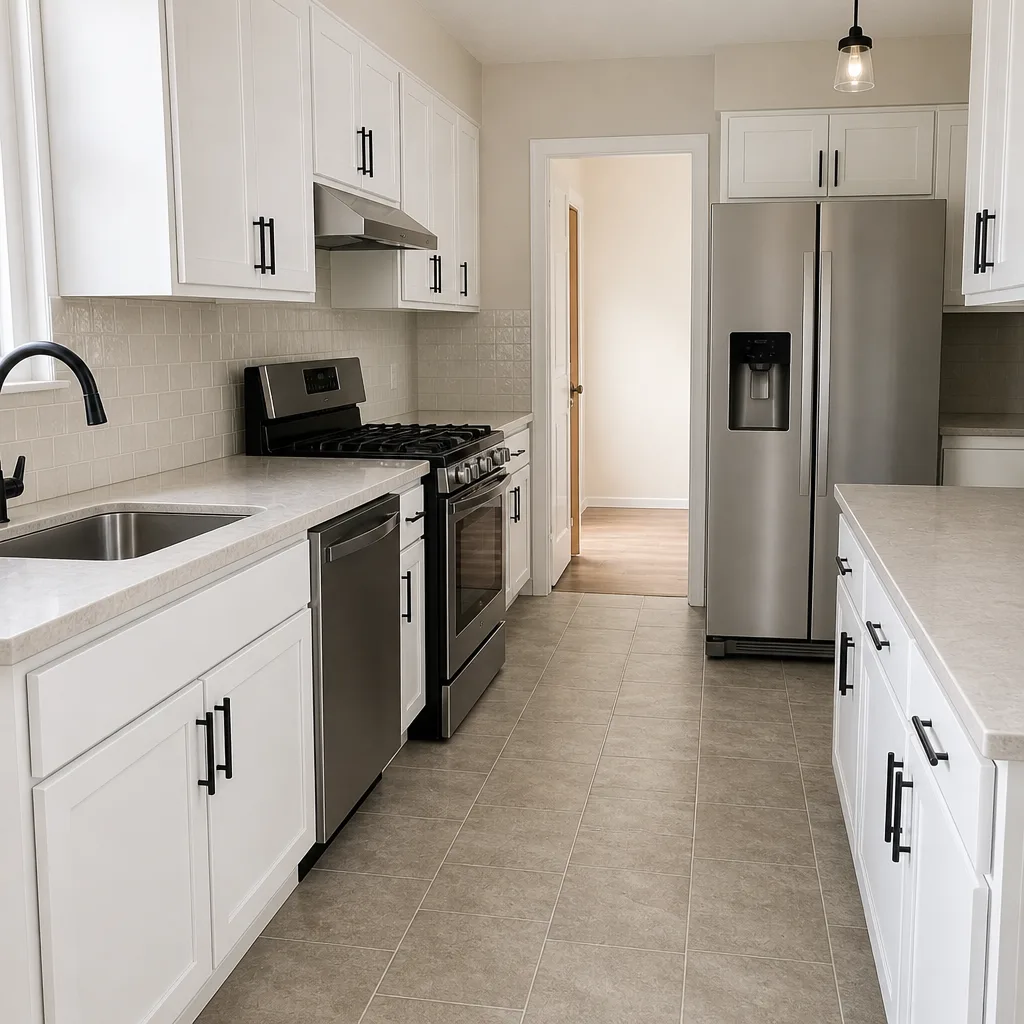
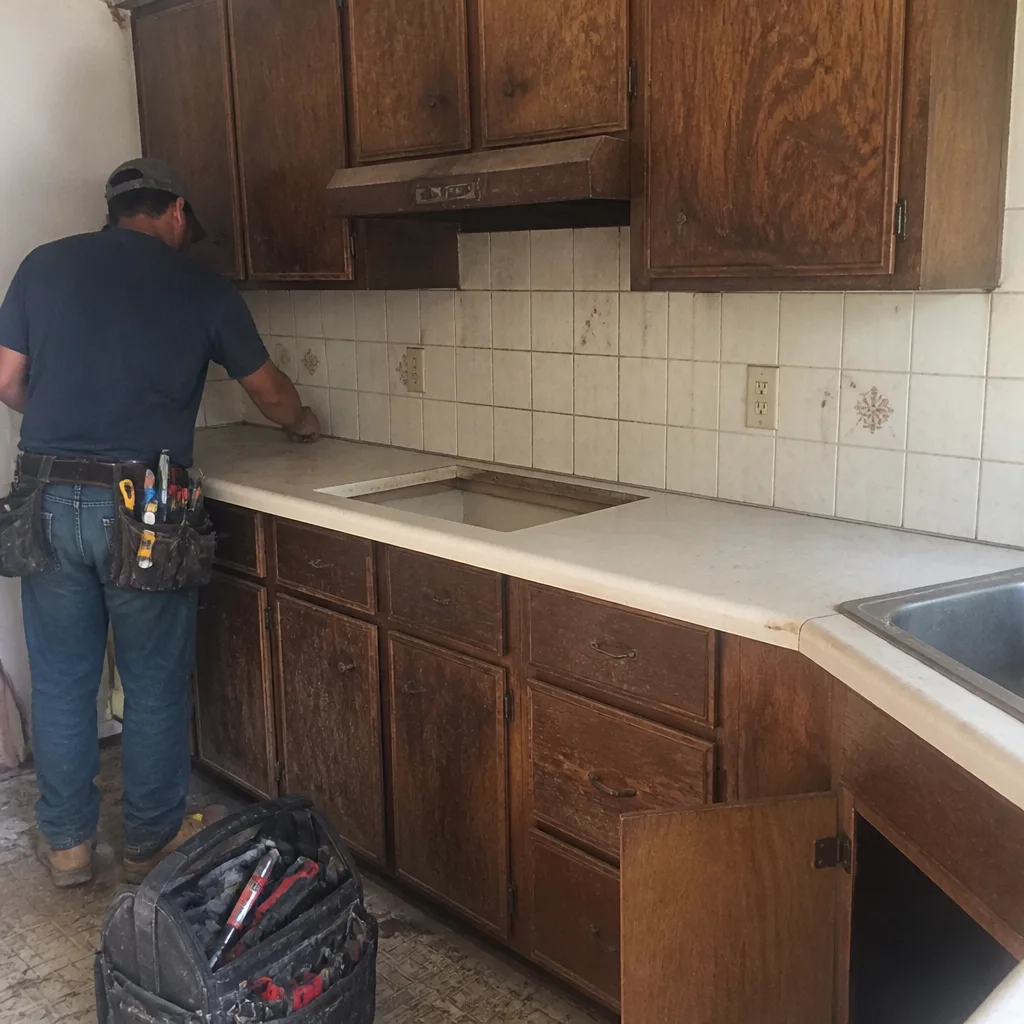
See the difference
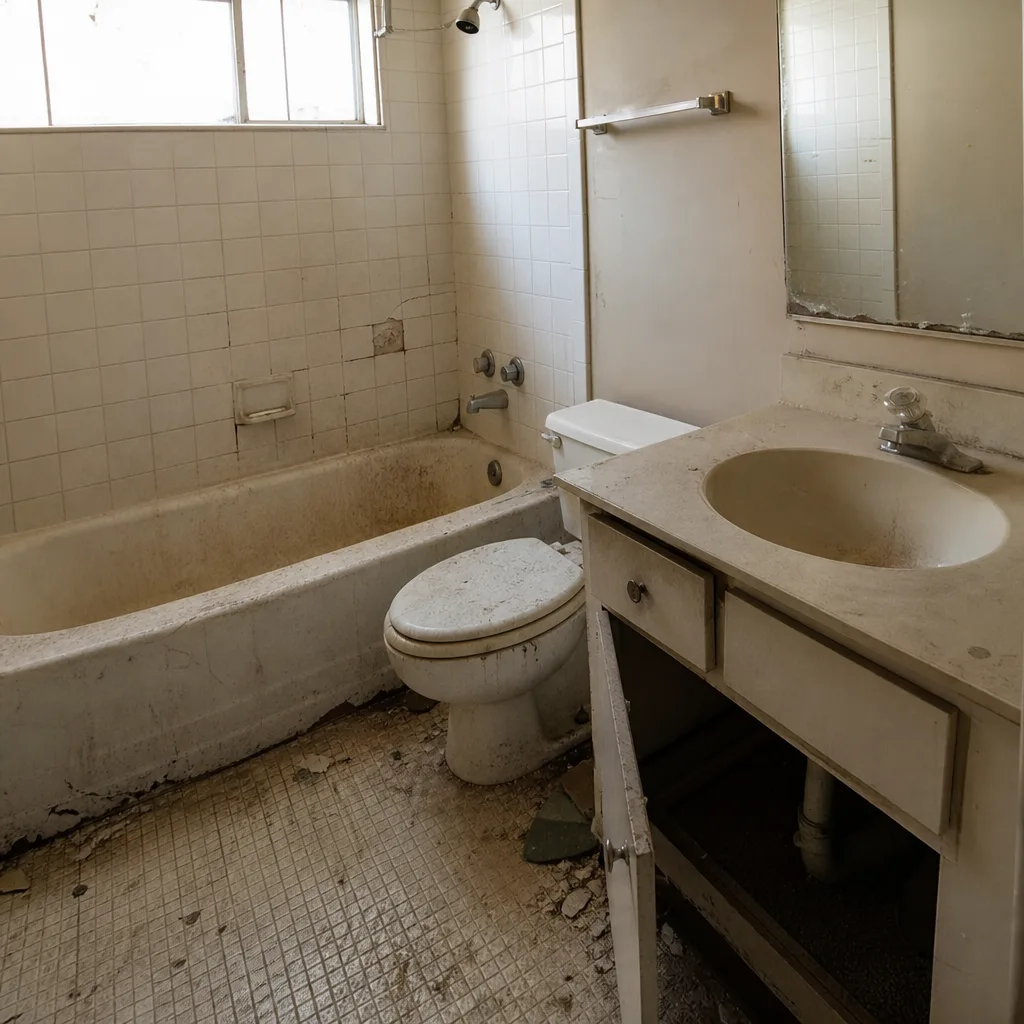 Before
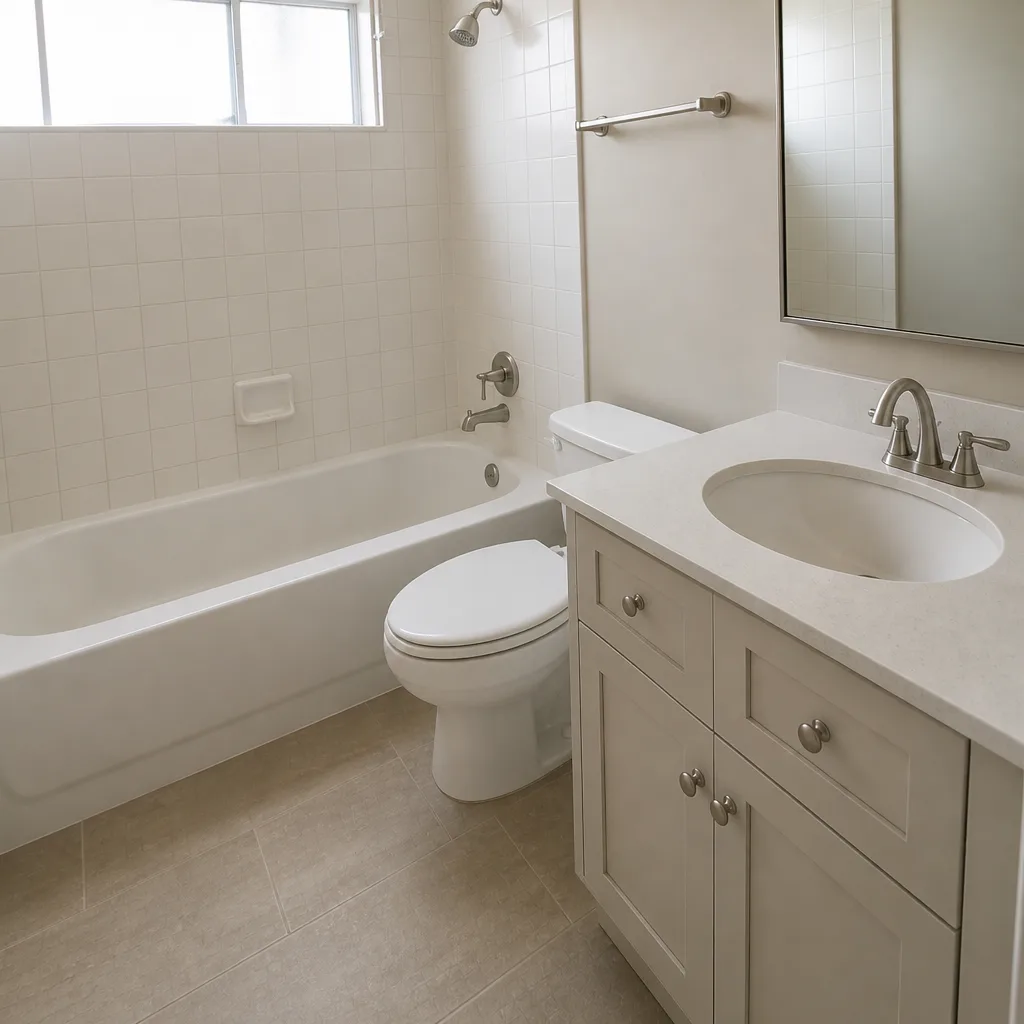 After
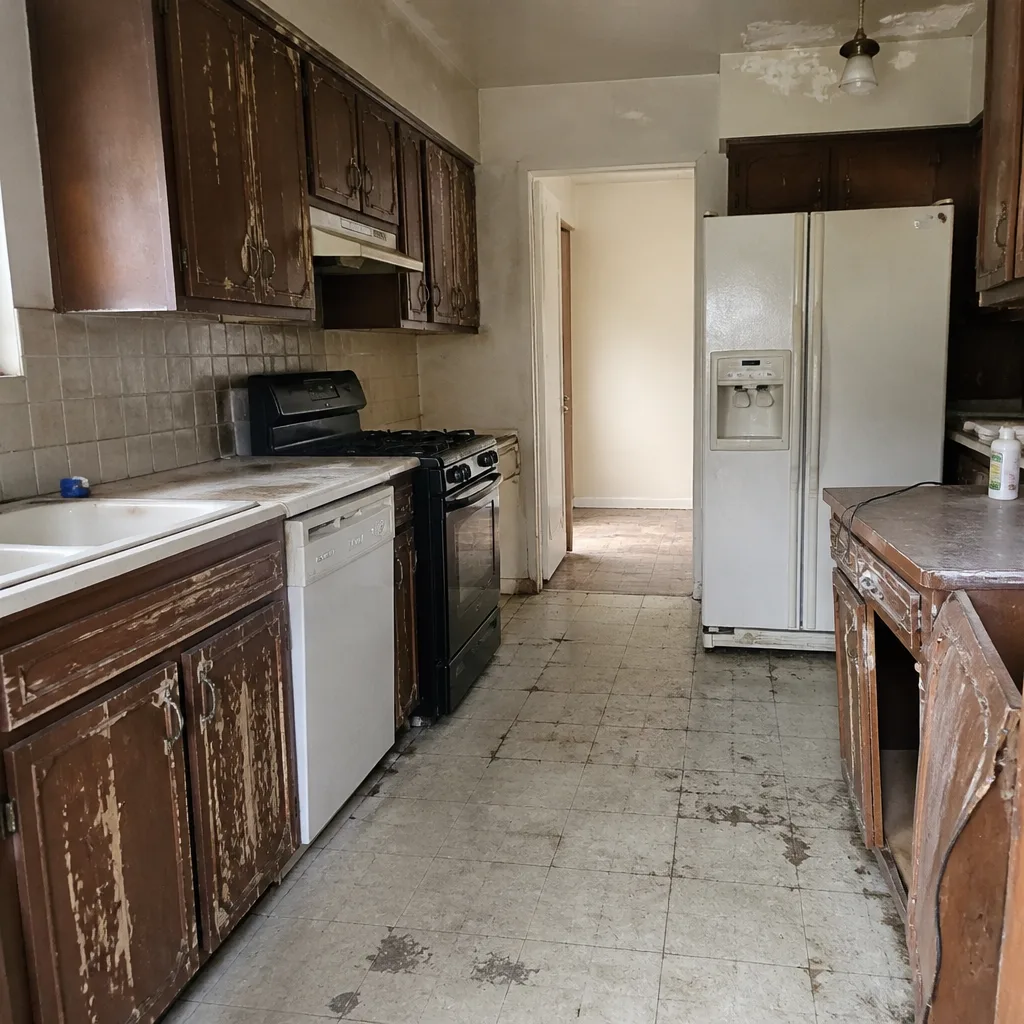 Before
 After
 Before
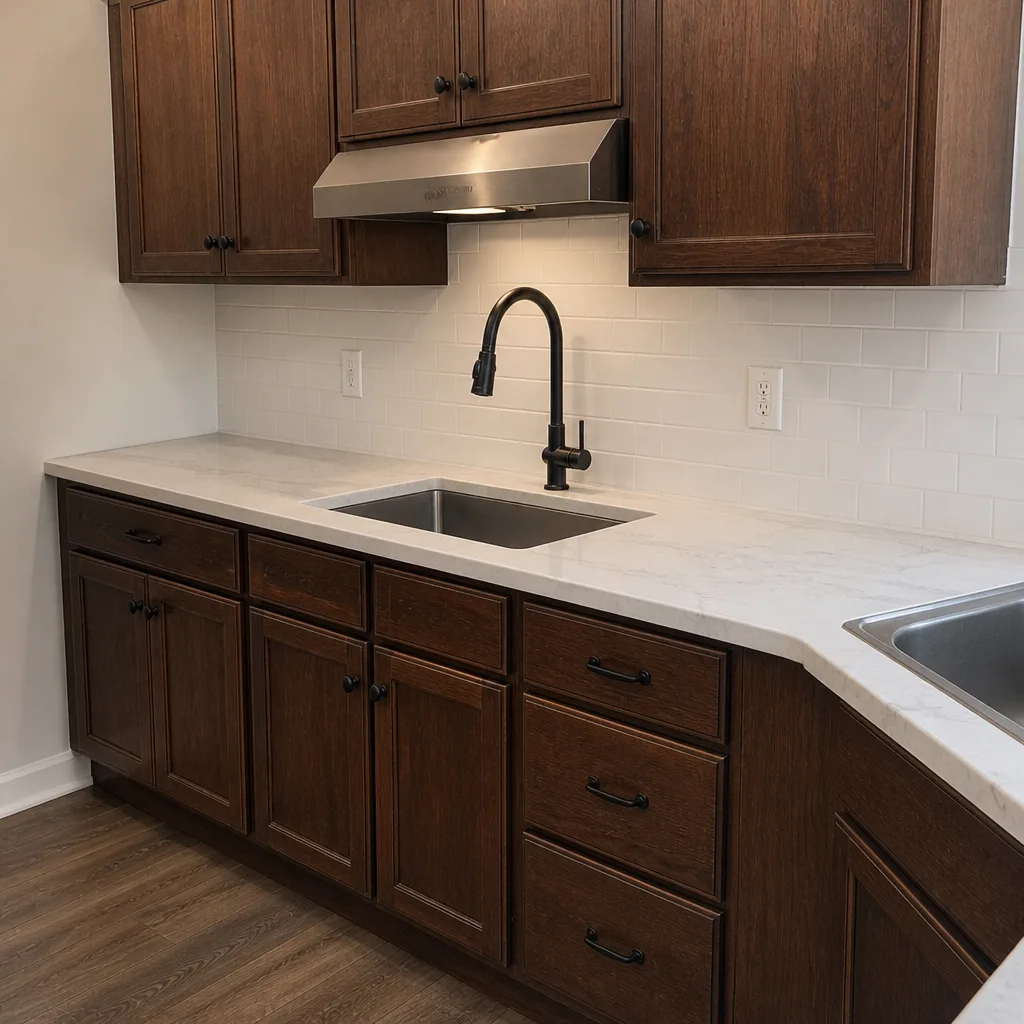 After
When to Call a Professional
Some of this you can read and review on your own – a schedule, a contract, a permit status. But there’s a line where the reading and the doing diverge. A wall you’re not sure is load-bearing, an electrical panel that needs upgrading to carry a new kitchen, a gas line that has to move for a range relocation, a rotted subfloor under the tile – these are not DIY territory. Move a gas line wrong and you have a safety problem no schedule can fix. Touch a live panel without the training and you put yourself and your home at real risk. These call for a trained, licensed professional, and a good one will tell you so plainly rather than let you talk yourself into it.
The same holds for the schedule itself. If you’ve read this far and you’re still not sure whether the timeline you’ve been quoted is realistic, or whether the contract you’ve been handed actually protects you, that’s the moment to get a second set of eyes. Penhallow Remodeling Irving offers free estimates in Irving – call (844) 320-5939 to schedule yours, and we’ll walk you through the phases, the permit time and the buffer before anyone picks up a tool.
Frequently Asked Questions

A typical home remodel in Texas runs 6 to 12 weeks for a kitchen, 3 to 6 weeks for a bathroom and 4 to 8 months for a whole-home renovation, with permit review adding 2 to 6 weeks before construction starts. Texas permit timelines vary by city, and Irving is on the thorough end of the range. Call (844) 320-5939 for an estimate with a real timeline attached.
Kitchen remodels in Irving typically run $18,000 to $55,000 depending on layout, cabinet line and countertop material – custom KraftMaid or Wellborn cabinetry and Cambria quartz sit at the higher end. The number that matters most is the one in writing before work starts. Call (844) 320-5939 for a written, line-item price on your kitchen.
Some change is normal, and the honest answer is that hidden conditions can move a schedule. What should not change without a written change order is your price. Our approach is a written price before any work starts, so the number on day one is the number on the invoice. If a schedule shifts for a real reason, you’ll hear it from us before the crew stops moving.
Yes – we pull permits and pass inspections as standard practice on every job that requires them. That includes Irving projects with structural, electrical or plumbing work where review takes longer. A permit status you can verify is part of the plan, not an afterthought. Call (844) 320-5939 if you’re not sure whether your current project was permitted.
You’ll have the milestone schedule in writing before work starts, with defined arrival windows for each day the crew is onsite. When a project is on track, you’ll know because the schedule says so and the work matches. When something needs to change, you’ll know that too, from a person on the phone, not a voicemail. Call (844) 320-5939 with any scheduling question – a real person answers.
Our 365-Day Done Right Promise covers it: if the work fails inside the guarantee period, we come back and fix it at no charge, and it’s written into the project terms. That includes a free second visit if a repair fails – no service call, no re-inspection fee. Call (844) 320-5939 to talk through what the guarantee covers on your specific project.
The Bottom Line
Timeline overruns aren’t bad luck – they come from permit delays, material lead times, hidden conditions and scheduling gaps, and three of those four are visible before you sign. Realistic timelines look like 6 to 12 weeks for a kitchen, 3 to 6 for a bathroom and 4 to 8 months for a whole-home, with permit review on top. A schedule you can read, a written price, and defined arrival windows are what separate a contractor who keeps a promise from one who breaks it. Read the schedule before you sign, and build your buffer before the first cabinet comes down.
Whether you’re planning a kitchen, a bathroom or a whole-home renovation in Irving, the right next step is a conversation, not a signature. Learn more about bathroom remodeling in Irving, explore the full Penhallow Remodeling Irving home page, and reach us at (844) 320-5939 for a free estimate. A real person answers, any hour, and the price you get is the price you keep.
Written by the team at Penhallow Remodeling Irving.