Last updated November 17, 2026




Free written scope consultation - allowances, timeline, and change-order rules on paper before a single trade is scheduled
DIY vs Professional Bathroom Remodeling: What’s Safe to Do Yourself
Painting a bathroom yourself saves about $300. Installing your own shower waterproofing incorrectly costs $4,000 to $8,000 to tear out and redo – and homeowner’s insurance often won’t cover water damage from an unpermitted self-install. That gap is the whole conversation. Bathroom remodeling has a narrow band of tasks that reward a careful DIYer and a wide band of tasks that look finished and correct but fail invisibly, usually inside a wall, months after you’ve moved the towels back in. This guide draws the line by task rather than by confidence level, with the local permit and climate details that matter in Irving.
Quick Answer
You can safely DIY demolition of non-structural surfaces, painting, accessory and fixture swaps, and replacing a vanity on an existing rough-in. You should hire licensed professionals for shower waterproofing, any drain or supply-line change, slab penetrations, electrical work inside wet zones, and moving plumbing walls. In Irving, anything that touches the slab or the drain system generally requires a plumbing permit and inspection, and that paperwork trail is also what protects your insurance claim if something leaks later.
Styles & brands we work with
- Kitchen remodeling
- Bathroom remodeling
- Home additions & ADU
- Roofing
- Windows & doors
- Driveway & pavers
- Fence
Table of Contents
- What’s Actually Safe to Do Yourself in a Bathroom
- The Hidden-Failure Problem: Why “Looks Done” Isn’t Done
- Shower Waterproofing: The One Task That Punishes Learning Curves
- Drains, Slabs and Texas Permit Reality
- How to Split the Job Between DIY and Professional Work
- What Your Insurance Policy Says (and Overrides)
- What’s Specific to Irving Bathrooms
- The Cost Math: Where DIY Saves and Where It Doesn’t
What’s Actually Safe to Do Yourself in a Bathroom
These tasks don’t hide their failures. If you get them wrong, you’ll see it. That’s the test we use before recommending a homeowner take something on: can you inspect the result with your own eyes and hands when it’s finished?
- Demolition of non-structural surfaces. Pulling old tile, removing a vanity cabinet, taking out a toilet (once the water is shut off and the flange is capped), stripping flooring down to the subfloor. Load-bearing walls, however, you leave entirely alone. In Irving, most mid-century ranch homes have at least one interior wall you do not want to touch without knowing what it is.
- Painting and drywall patching above the wet zone. Ceilings, upper walls, trim and doors. Use a bathroom-rated paint with a mold-resistant additive, especially in Irving’s humid late-spring stretch where the AC runs hard and the bathroom stays damp between showers.
- Vanity swaps on the existing rough-in. If the new cabinet lines up with the existing supply lines and the drain stub-out, you can generally swap the box yourself. The moment the drain needs to move even six inches, you’re into a plumbing permit.
- Accessory and fixture installation. Towel bars, mirrors, shelving, toilet paper holders, showerheads, faucet cartridges, a new toilet on an existing flange. Those are fastener-and-thread jobs, not systems jobs.
- Trim, caulking and sealing. Recaulking the tub surround and floor perimeter with a mildew-resistant silicone is one of the highest-value, lowest-risk things you can do in an Irving bathroom.
Everything on that list shares one trait: a homeowner with patience and a decent level of care can finish it and inspect it. Nothing on that list has to be right on the first try or it silently fails inside a wall.
The Hidden-Failure Problem: Why “Looks Done” Isn’t Done
Here’s the thing about bathroom work that trips people up. A shower that leaks looks exactly like a shower that doesn’t, for the first several months. The tile is set, the grout is bright, the water runs. The failure is happening behind all of it – in the pan, in the cement board substrate (the moisture-resistant layer behind your tile), in the drain connection you tightened by feel – and it doesn’t announce itself. It shows up as a soft spot in the hallway drywall. A musty smell under the sink cabinet. A stain spreading across the ceiling of the room below.
We’ve walked into plenty of Irving homes where a bathroom was redone two or three years earlier and the story is the same. The tile looked fine. The water damage was already into the subfloor and the joists.
Three categories of work fail this way:
- Waterproofing systems. Liquid membranes, sheet membranes, pre-formed pans. One thin spot, one missed corner, one gap at the curb, and water finds it. The install has to be continuous and correct. There’s no such thing as “mostly waterproof.”
- Rough-in plumbing. Supply lines and drain lines behind the wall. A joint that weeps a drop an hour stays hidden for six months and then you’re cutting out a wall.
- Electrical in wet zones. Receptacles and switches near water, exhaust fan wiring, any lighting inside the shower footprint. Wrong-side-of-code work is invisible until it’s a shock hazard or an insurance denial.
What those three have in common: you cannot inspect the result from the outside. You can’t see whether the membrane has a pinhole. You can’t see the pipe joint behind the wall. You can’t see whether the GFCI was wired correctly downstream of the load. That’s the entire line. If success or failure is visible, a careful homeowner can own it. If it’s hidden, it doesn’t belong in a DIY project unless you’ll bring in an inspector to verify it before you close the wall.
Shower Waterproofing: The One Task That Punishes Learning Curves
Almost every “DIY bathroom remodel gone wrong” case we’re called about involves the shower. The tile looks fine and the shower pan has been leaking into the subfloor for a year. Repairing that usually means:
- Tearing out the tile, the cement board and the pan.
- Assessing and usually replacing water-damaged subfloor and framing.
- Rebuilding the pan and waterproofing correctly.
- Re-tiling, re-grouting, re-sealing.
On a standard tub-to-shower conversion in Irving, that tear-out and redo routinely lands in the $4,000 to $8,000 range depending on how much subfloor is lost and whether the shower was on a second floor. That’s more than a professional waterproofing install would have cost on the front end. And the insurance policy almost never covers it, because water damage from an unpermitted self-install is typically excluded.
A proper shower waterproofing system isn’t complicated, but it’s unforgiving. The substrate has to be the right product, the seams and corners have to be bonded with the correct reinforcing material, the pan has to slope to the drain at the right pitch, and the whole thing has to be flood-tested before tile goes on. Most systems also require the install to be done by a contractor whose work is warrantied; if you call the manufacturer because your pan leaks, the warranty excludes installs by unlicensed DIYers.
We install shower systems that come with their own manufacturer warranties alongside ours, so if something goes wrong you have more than one phone number to call. That’s the standard you should ask for if you’re considering doing this yourself and want someone to inspect what you’ve built. If you’d rather have the whole thing done under a written price up front, that’s what a bathroom remodeling in Irving project with us looks like.
Drains, Slabs and Texas Permit Reality
Texas doesn’t require a statewide general contractor license for bathroom remodels. That’s a common misconception. What Texas does require is that plumbing and electrical work be done by a state-licensed plumber or electrician, and pulled under permit by that tradesperson. The state’s plumbing code and adoption of the International Residential Code set the technical standard. Individual cities set the permit process, fees and inspection schedule on top of that.
For a bathroom, this usually means:
- Relocating a drain or supply line requires a plumbing permit. Full stop. That includes moving the shower drain, moving a sink drain, adding a second lav, or relocating a toilet flange.
- Any slab penetration requires a plumbing permit and inspection. Irving sits on a mix of clay and limestone substrate. Any drain that has to go through the slab to relocate the fixture means concrete cutting and a permittable plumbing event, and the plumber needs to see the work before it gets poured back.
- Electrical work in the bathroom wet zone requires an electrical permit. Adding a GFCI outlet, moving a vanity light, installing in-shower lighting or adding an exhaust fan on a new circuit.
- Cosmetic work that stays behind the finish does not require a permit. Painting, tile replacement over sound substrate, swapping a fixture on existing wiring or plumbing, and replacing a vanity on existing rough-in generally do not need permits.
- Permits are the paper trail your resale and your insurance rely on. When you sell the home, a buyer’s inspector will flag unpermitted bathroom work, and your insurer will ask about it if there’s a claim.
If you’re not sure whether your plan triggers a permit, that’s a two-minute phone call with the city, and it’s worth making before you pick up a hammer. We pull all required permits on our general contractor in Irving projects and pass inspections before closing up walls, because that record protects the homeowner as much as it protects us.
How to Split the Job Between DIY and Professional Work
This is where the real savings live. You don’t have to choose between “all DIY” and “all contractor.” The best-value path for most Irving homeowners is a clean split, where you take the visible, low-risk work and the licensed trades take the hidden work.
- Hire out the shower or tub-to-shower conversion as a package. Waterproofing, pan, drain, tile and valve. One contractor, one warranty, one number to call if it leaks. This is the part you don’t split.
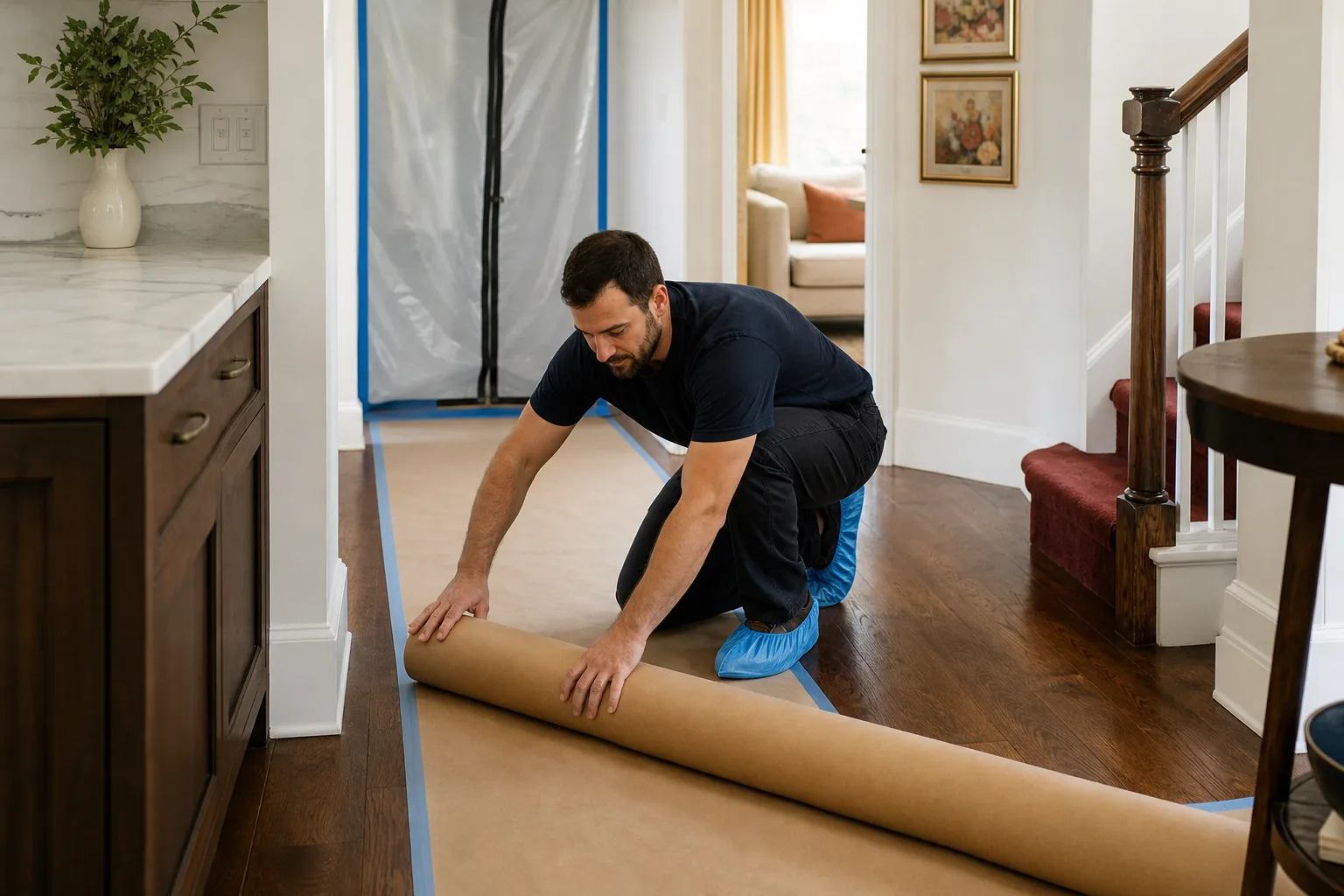
- Take demo yourself. Tearing out tile, cabinets, the old vanity and flooring is real money saved – typically $800 to $2,500 on a standard bathroom – and it can’t hide a failure. Wear eye protection and a respirator; older Irving homes sometimes have tile mastic and drywall that aren’t friendly to breathe.
- Hire the licensed plumber and electrician separately if your GC project allows it. Have them rough in, permit, and inspect the plumbing and electrical, then you finish the walls.
- Take the finish work yourself. Paint, trim, caulking, vanity install on the existing rough-in, and accessory mounting. This is where a careful homeowner saves the most per hour.
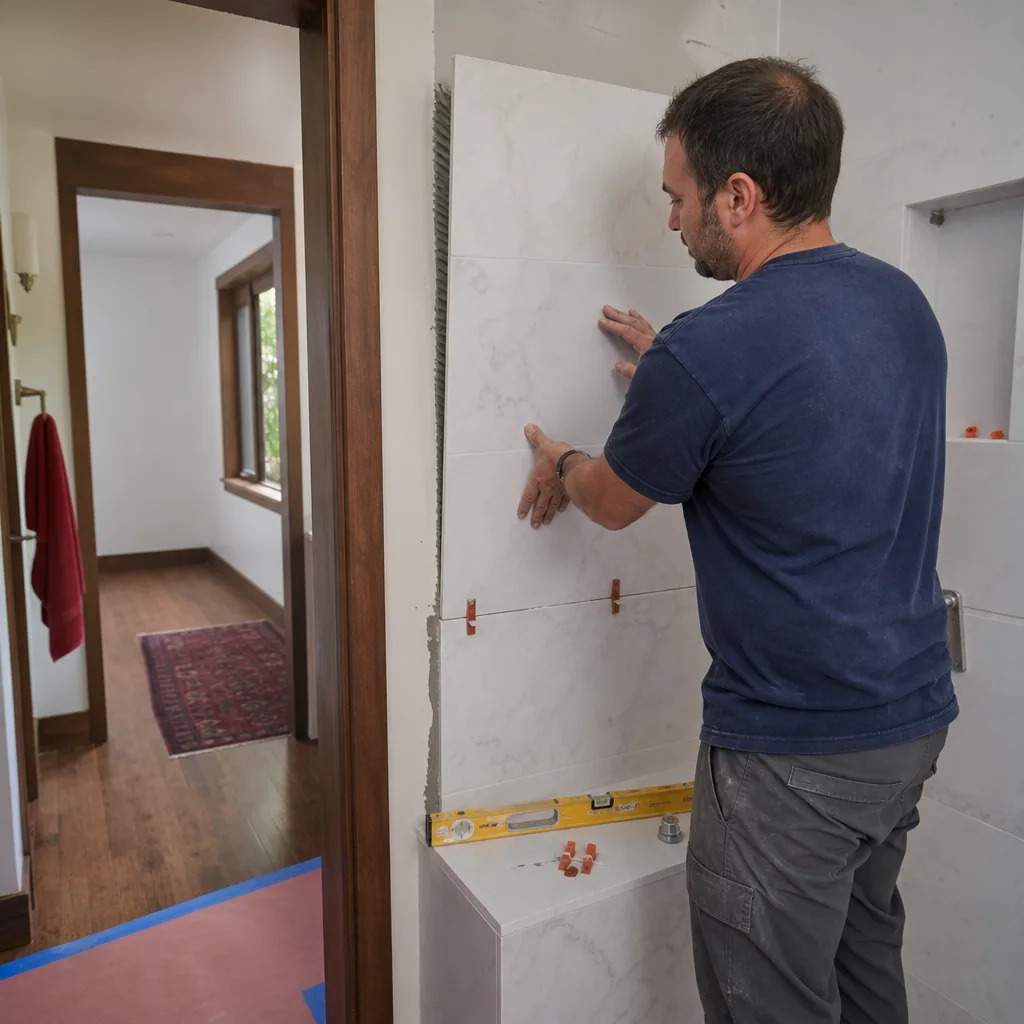
- Have the tile set by a pro if it’s visible floor tile. Tile is one of those tasks that looks DIY-doable and isn’t, not because it’s dangerous but because a bad layout or bad grout line is the thing everyone sees when they walk in. Wall tile behind a mirror is more forgiving; the floor isn’t.
Doing it this way usually saves 15 to 30 percent off a full turnkey price on a mid-range bathroom, while keeping the invisible work under a written warranty. On a typical Irving hall bath in the $18,000 to $32,000 turnkey range, that’s real money – without taking on the risk that has cost other homeowners $6,000 in tear-out.
If your project is expanding beyond the bathroom – a master suite addition, or a whole-home update where the bathroom is one piece – the same logic applies, and the kitchen remodeling in Irving projects we run follow the same hidden-versus-visible split. Anyone planning a larger interior update is usually working with a Penhallow Remodeling Irving home project scope that covers the whole thing.
What Your Insurance Policy Says (and Overrides)
Here’s the part most guides skip. Even if Texas law and the City of Irving permit you to do a specific piece of work yourself, your homeowner’s insurance policy can override that. Policy language is a contract, separate from code, and it usually wins in a claim.
Common policy provisions worth reading before you start:
- Water damage exclusions for unpermitted work. Many policies exclude damage traced to work that required a permit and didn’t get one. That’s the shower pan scenario most often denied.
- Faulty workmanship exclusions. Policies generally exclude the cost of correcting your own work, which means you eat the whole tear-out, not just the deductible.
- Mold exclusions and sublimits. Even where water damage is covered, mold remediation is often capped at a low sublimit or excluded entirely. A slow shower leak is a mold event as much as a water event.
- Contractor requirements. Some policies require that plumbing and electrical work be performed by licensed tradespeople, regardless of what the state allows for DIY.
Pull your policy and read the exclusions section before you decide a task is “just cosmetic, so it’s fine.” If the task touches plumbing, electrical or waterproofing, call your agent and ask the direct question: if this fails, are you covering it? You’ll save yourself the stress of finding out later.
What’s Specific to Irving Bathrooms
Irving has its own quirks that affect what’s sensible to DIY versus what should go to a pro.
- Homes built in the 1960s through 1980s dominate the interior renovation demand here. That means original cast iron drain lines under many slab foundations, and galvanized supply lines in some of the oldest pockets. Touching either one is not a DIY job, because the moment you open the wall or cut the slab, you find out whether the whole line needs replacing.
- Slab-on-grade construction is the norm. Moving a drain means cutting concrete, and that means a permit and an inspection before the concrete goes back. There’s no crawl space to work around here the way there is in some Texas markets.
- The summer humidity and shoulder-season storms put every shower through a real test. Bathrooms without adequate exhaust in Irving are more likely to grow mold behind the paint, which is why we install oversized exhaust fans and seal the surround with siliconized grout rather than cementitious grout alone.
- Clay soil movement stresses older plumbing. Any bathroom where the toilet rocks or a drain line makes noise under the slab should have the plumbing scoped before you take on any of the surrounding work, because what looks like a cosmetic remodel can turn into a slab repair.
If you’re in the middle of this decision for a home in Valley Ranch, Las Colinas, or the older neighborhoods near downtown, a free walk-through is worth more than another weekend of internet research.
The Cost Math: Where DIY Saves and Where It Doesn’t
Real numbers get you further than a general “DIY saves money” claim. Here’s the split we see on a typical mid-range Irving bathroom, meaning a hall bath roughly 35 to 50 square feet, tub or shower staying in the same footprint.
- Demo (DIY): saves $800 to $2,500 versus pro.
- Paint and trim (DIY): saves $300 to $800.
- Vanity swap on existing rough-in (DIY): saves $400 to $900.
- Accessory installation (DIY): saves $150 to $400.
- Full bathroom turnkey: $18,000 to $32,000 for a mid-range material grade.
- Shower waterproofing done professionally: $1,800 to $3,500 of that total, and it carries a warranty. Doing it yourself saves about that much and loses the warranty.
- Drain or supply relocation: $900 to $2,400 plumbing scope, plus permit and inspection. Not a DIY candidate in Irving.
- Shower redo after a failed DIY waterproofing: $4,000 to $8,000 in tear-out and rebuild, usually not covered by insurance.
Add it up honestly. A homeowner who takes demo, paint, vanity and accessories saves about $1,650 to $4,600. That’s real savings. A homeowner who also takes waterproofing saves maybe $2,000 more, and if the membrane fails, eats a $6,000 rebuild plus the loss of their shower for a month. That’s the trade, in raw numbers.
Common Mistakes to Avoid
- Doing your own shower waterproofing without a flood test. The pan must be tested with standing water for at least 24 hours before tile goes on. Most DIY failures are the pan, and the flood test is the only way to know. If you can’t or won’t flood test, don’t take this on.
- Moving a drain “just a few inches” without a permit. In Irving, slab penetrations trigger plumbing permit requirements regardless of the distance. Skip the permit and you own the failure and the insurance denial.
- Buying a vanity before checking the existing rough-in. Standard rough-in spacing is 8 inches on center for older builds and 4 inches on center for some newer models. Measure the existing supply stubs and the drain stub-out before you order the cabinet, not after it’s in the driveway.
- Re-tiling over old tile without inspecting the substrate. In older Irving homes, the tile behind the old tile is sometimes drywall, sometimes failed cement board, and sometimes 45-year-old greenboard. Set new tile on any of those and it cracks within a year.
- Skipping the exhaust fan on a “small” remodel. Every bathroom in Irving needs an exhaust fan rated for the square footage. If your remodel replaces the fan or adds one, wire it through a timer, not a switch. This also keeps your paint warranty honest.
- Assuming your insurance covers a DIY waterproofing failure. Pull your policy and read the exclusions before you take the job. The claim does not survive on “I didn’t know.”
- Losing the permit paper trail. Even if the city record shows the permit was filed, keep your own copy of the inspection approval. When you sell the home in ten years, the buyer’s inspector will ask.
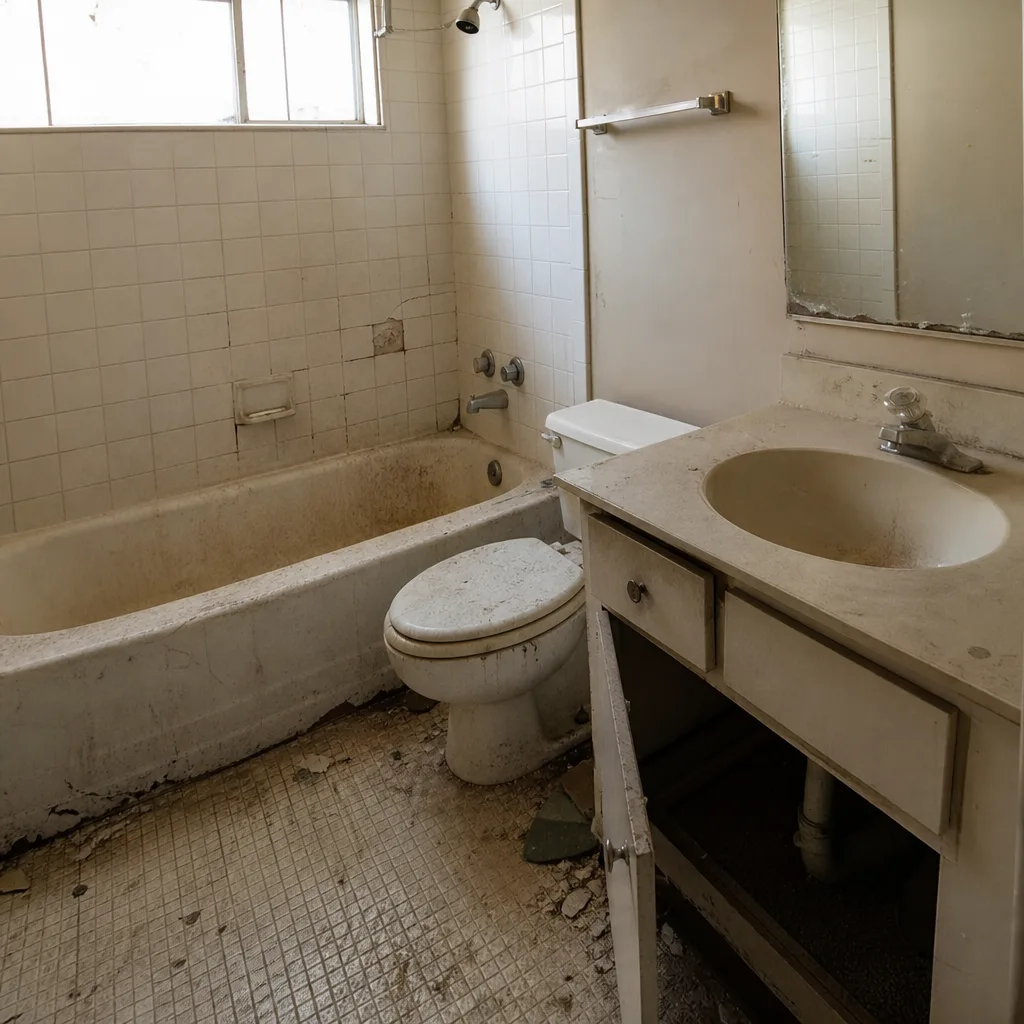
See the difference
 Before
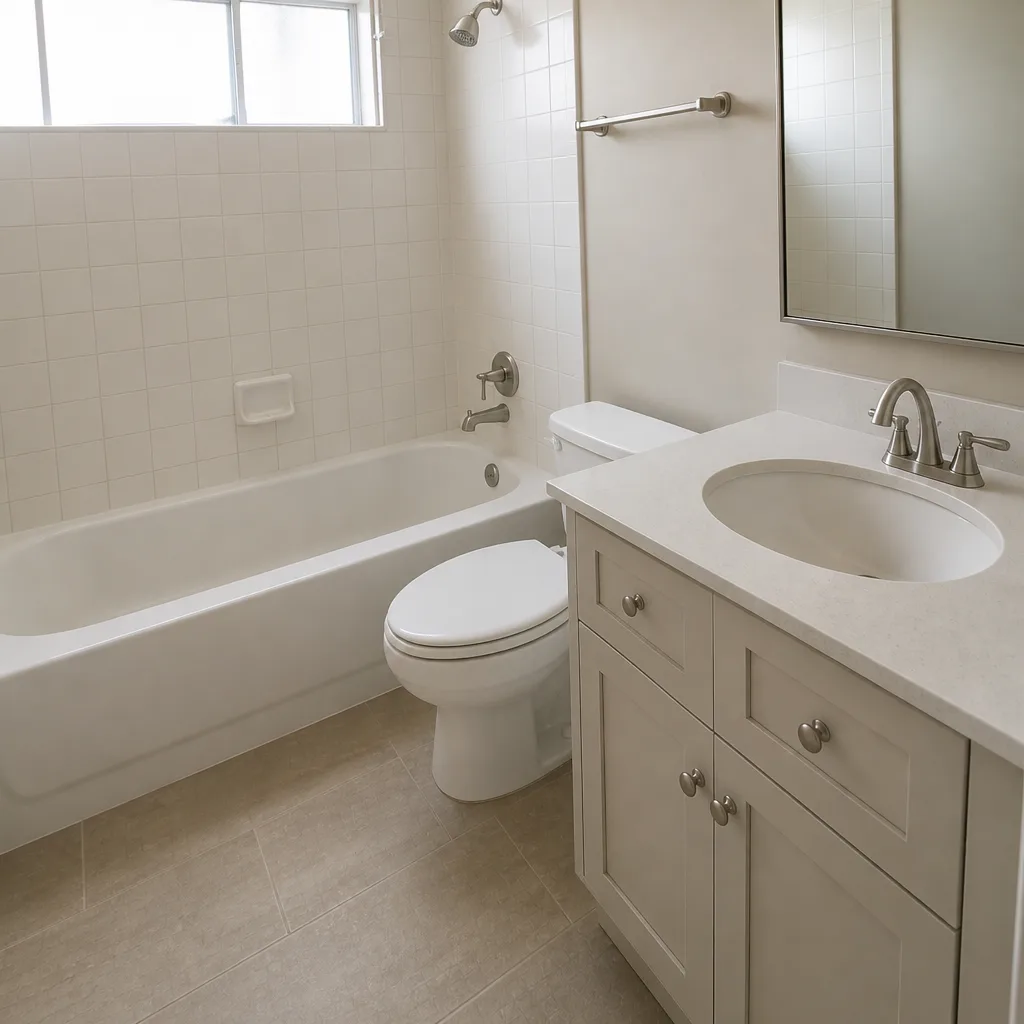 After
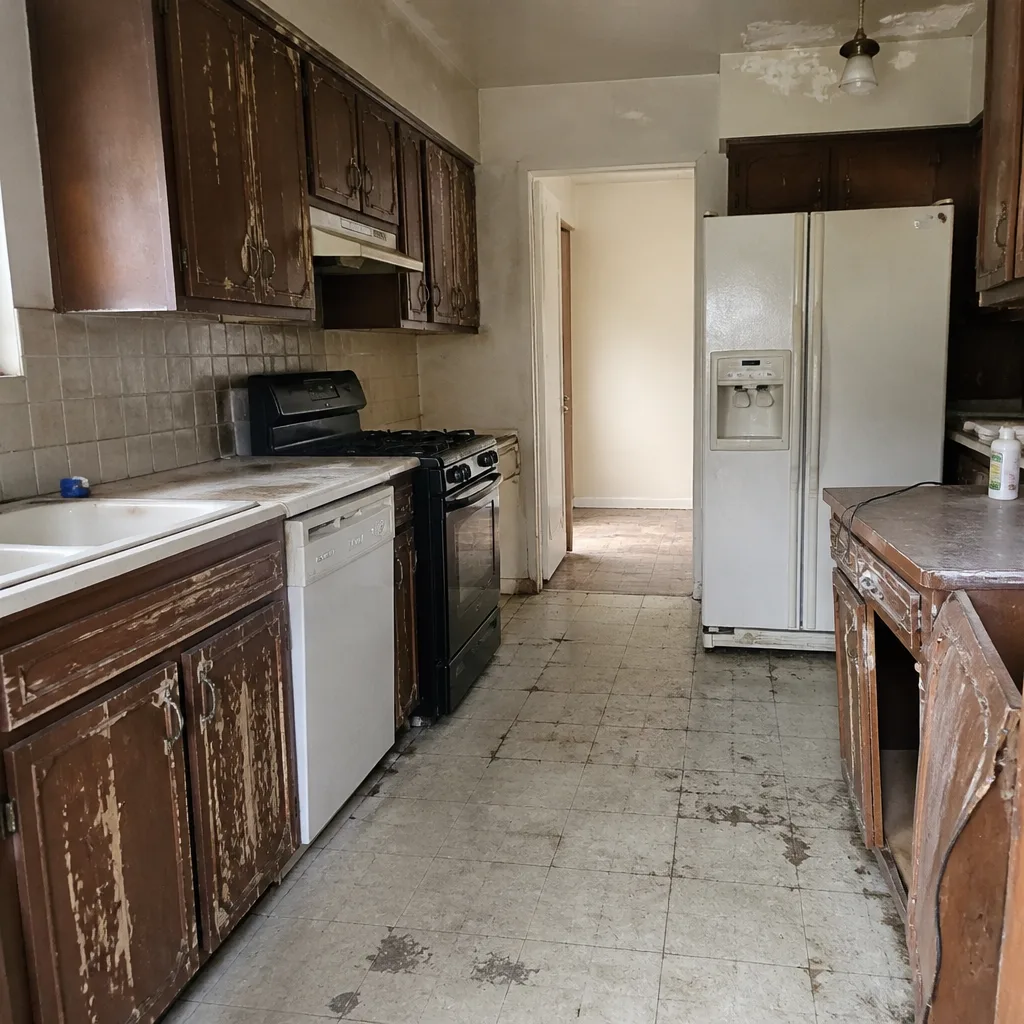 Before
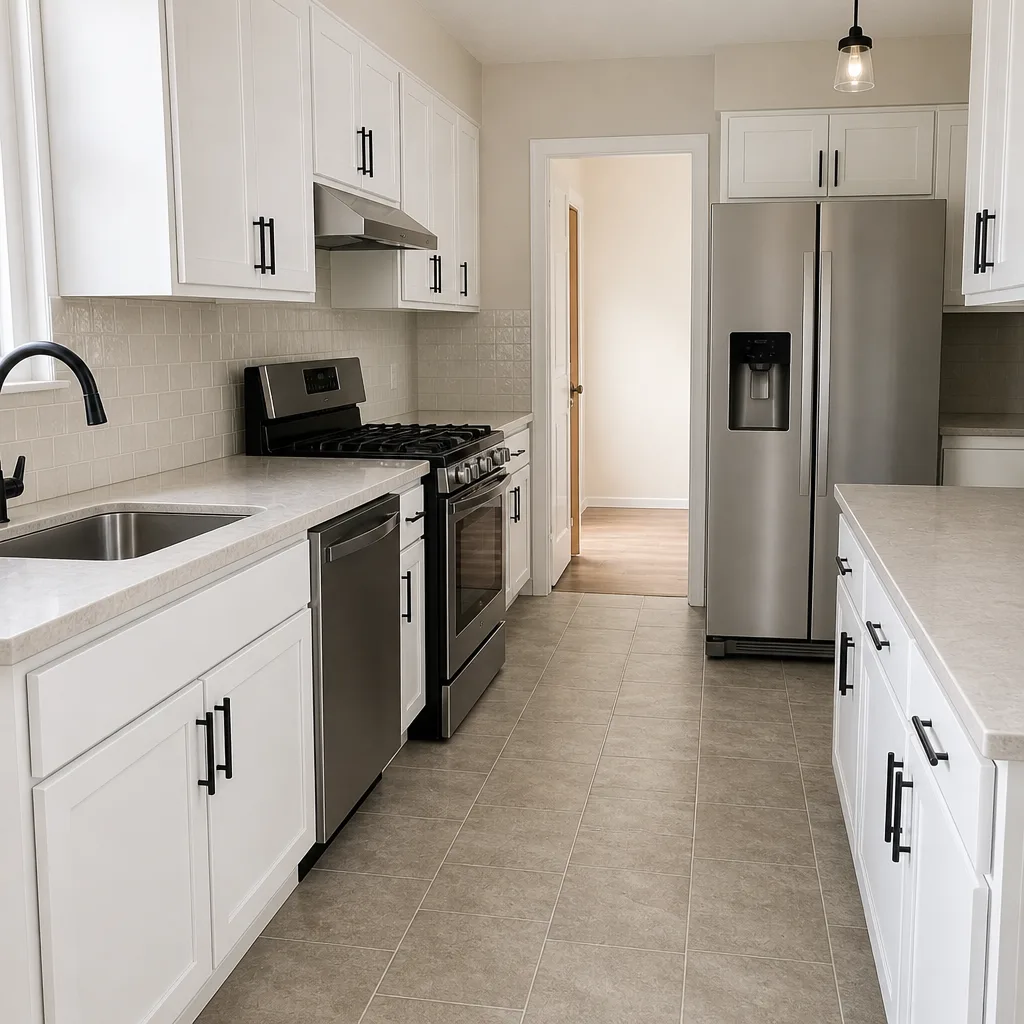 After
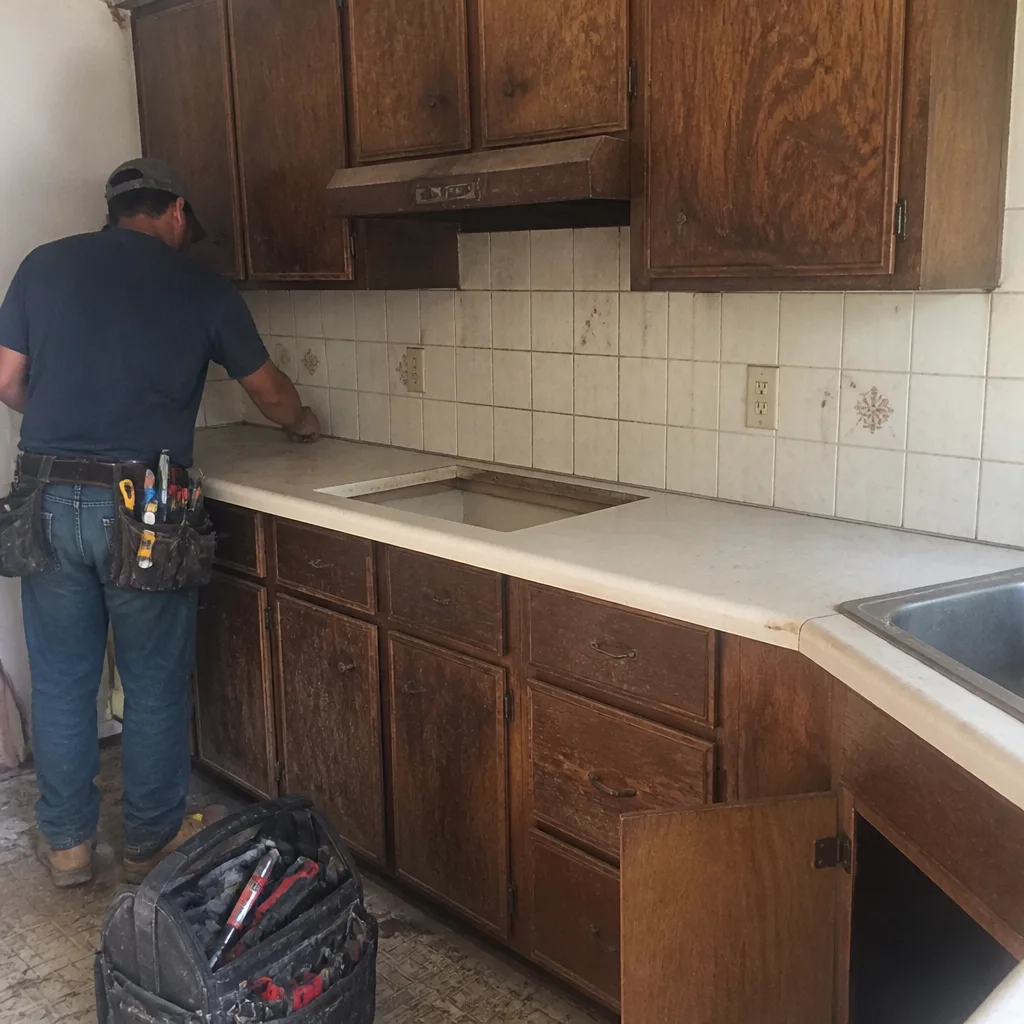 Before
 After
When to Call a Professional
Call a professional if any of the following applies to your project: your shower waterproofing is failing or needs replacement, any drain or supply line is moving, the toilet flange is cracked or the subfloor is soft, your tile substrate is not sound, or the electrical work involves anything other than swapping a fixture on an existing circuit. Also call a pro if the shower has any evidence of water damage in the wall behind it – a soft spot, bubbling paint or discolored drywall – because that’s the point at which the repair is bigger than the visible problem.
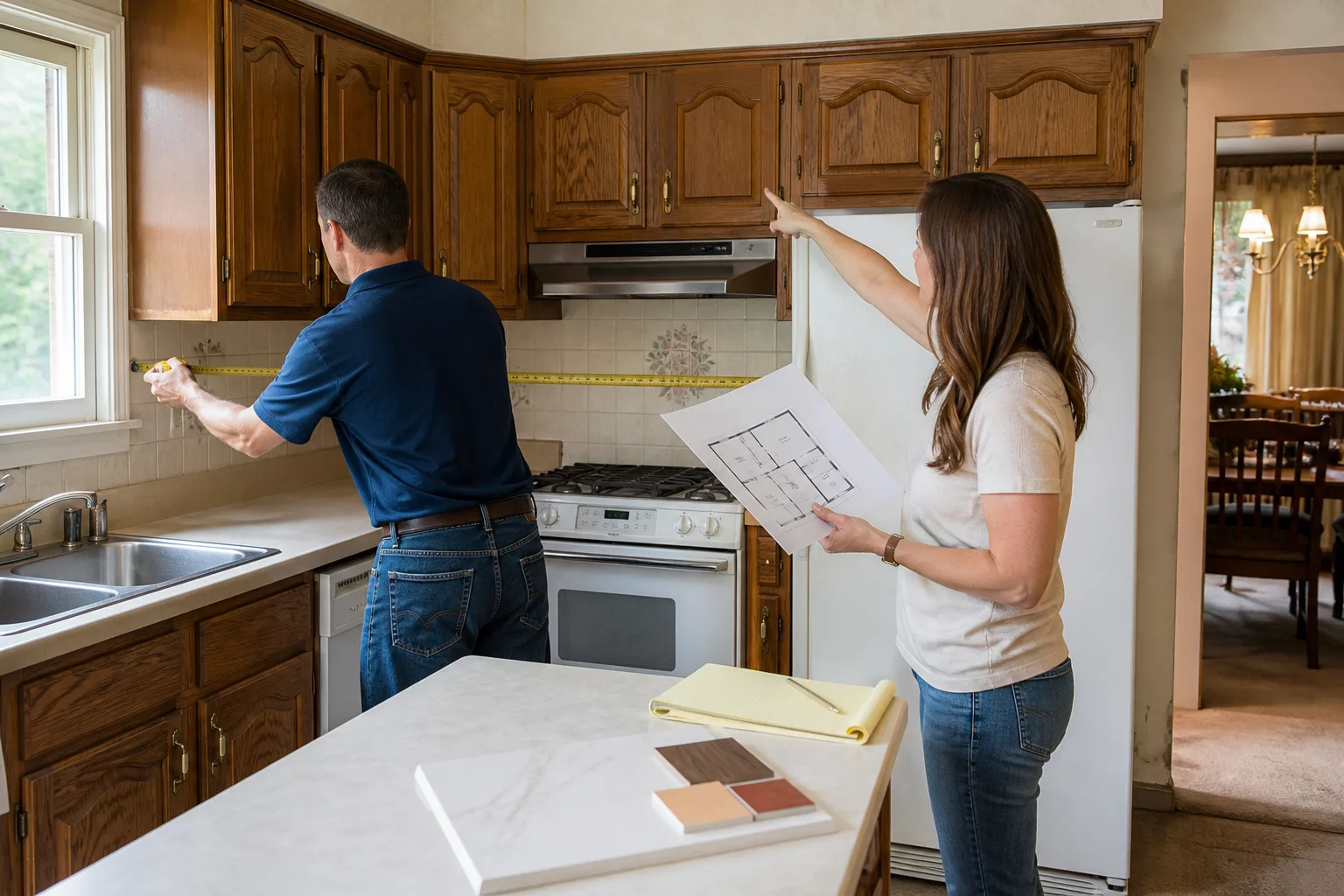
If you’re in Irving and not sure which side of the line your plan falls on, a walk-through settles it. Penhallow Remodeling Irving offers free estimates in Irving – call (844) 320-5939 and we’ll look at the bathroom before you start demo.
Frequently Asked Questions
Yes, for cosmetic and non-structural work, but not for plumbing or electrical work that the state requires to be performed by a licensed tradesperson under permit. Texas doesn’t license general contractors, but it does license plumbers and electricians, and bathroom work that relocates drains, adds circuits or penetrates the slab requires that licensed work. Your homeowner’s insurance policy may further restrict what you can DIY without losing coverage.
A mid-range full bathroom remodel in Irving typically runs $18,000 to $32,000 turnkey, with higher-end upgrades (larger footprint, premium tile, freestanding tub) landing in the $32,000 to $55,000 range. A cosmetic refresh – paint, vanity, fixtures, tile over sound substrate – is often $4,000 to $9,000. Call (844) 320-5939 for a written estimate specific to your bathroom.
You can tile the walls on a pre-formed pan install yourself if the pan is set on the correct substrate and the drain connection is done correctly, but the pan-to-wall transition is where most DIY leaks start. The joint between the pan and the cement board substrate needs to be waterproofed with the correct membrane and reinforcing material, and it needs a flood test before tile. If you can’t flood test or aren’t confident in the transition detail, hire it out.
Usually not. Most homeowner’s policies exclude damage caused by faulty workmanship and often exclude water damage traced to unpermitted work. Read your exclusions section before starting the project, and if the task involves plumbing, electrical or waterproofing, call your agent and ask the direct question about coverage before work begins.
It depends on the scope. Cosmetic updates generally do not require a permit, but any plumbing or electrical work performed by a licensed tradesperson requires one, and any slab penetration beyond a plumbing fix requires permit and inspection. Call the City of Irving to confirm your specific scope; a two-minute call before demo prevents a much bigger conversation at claim time.
Yes. Every permitted project we take on includes pulling the required permits and passing the inspections before we close up walls. We also give you a written price before work starts, and the number on the invoice is the number on the written estimate. Call (844) 320-5939 to schedule your free estimate in Irving.
The Bottom Line
The line between DIY and professional bathroom work runs down the middle of the wall – literally. On the outside of the wall, you can paint, tile over sound substrate, swap a vanity on existing rough-in, mount accessories and save $1,600 to $4,600 without taking on real risk. Inside the wall, hidden failure is the whole story: waterproofing, drain location, slab penetrations, electrical in wet zones and rough-in plumbing all fail invisibly and cost $4,000 to $8,000 to correct after the fact. In Irving, that hidden work also has a permit and inspection trail that your insurance company expects to see. Split the job. Take the visible work yourself, hire the hidden work out under a written warranty, and you’ll save real money without taking on the risk that has cost other homeowners more than the pro quote would have.
If you want a written price on the professional scope of your bathroom before you lift a hammer, call Penhallow Remodeling Irving at (844) 320-5939 for a free estimate. We’ll walk your bathroom, tell you plainly which tasks you can safely take yourself, and put a written number in front of you for the rest – with the 365-Day Done Right Promise backing every project we complete. Background-checked, uniformed technicians on every job; a live person answering the phone any time you call.
Written by the team at Penhallow Remodeling Irving.