Last updated November 17, 2026



Free written scope consultation - allowances, timeline, and change-order rules on paper before a single trade is scheduled
DIY vs Professional Kitchen Remodeling: What’s Safe to Do Yourself
Most homeowners draw the DIY line in the wrong place. They assume the risky work is whatever looks physically hard, so they hire out the cabinet install and handle the outlet swap themselves. That’s backwards. The real dividing line in a kitchen remodel isn’t difficulty, it’s consequence. A bad paint job fails in a way you can see and fix for the cost of paint. An unpermitted electrical change fails quietly, then surfaces during a home sale years later. This guide walks through what you can genuinely do yourself in an Irving kitchen, what only looks safe, and where Texas licensing law removes the choice entirely.
Quick Answer
You can safely DIY painting, cabinet hardware swaps, open-shelf installation, and light cosmetic surface work. Anything that requires a permit, touches a gas, electrical or structural system, or fails in a way that damages adjoining work belongs with a licensed professional. In Texas, moving gas lines and doing panel or branch-circuit electrical work legally require a licensed plumber or electrician, and homeowner ability doesn’t change that requirement.
Styles & brands we work with
- Kitchen remodeling
- Bathroom remodeling
- Home additions & ADU
- Roofing
- Windows & doors
- Driveway & pavers
- Fence
Table of Contents
- The Three Buckets: Safe, Looks-Safe, and Hire-Out
- Tasks That Are Genuinely Safe to DIY
- Tasks That Look Simple but Carry Permit or Warranty Risk
- Texas Licensing Reality: What the Law Decides for You
- Can I Do My Own Demo? The Asbestos Question
- The Hidden Cost Math of DIY Gone Wrong
- A Decision Framework You Can Apply in Five Minutes
- What Makes Irving Kitchens Different
The Three Buckets: Safe, Looks-Safe, and Hire-Out
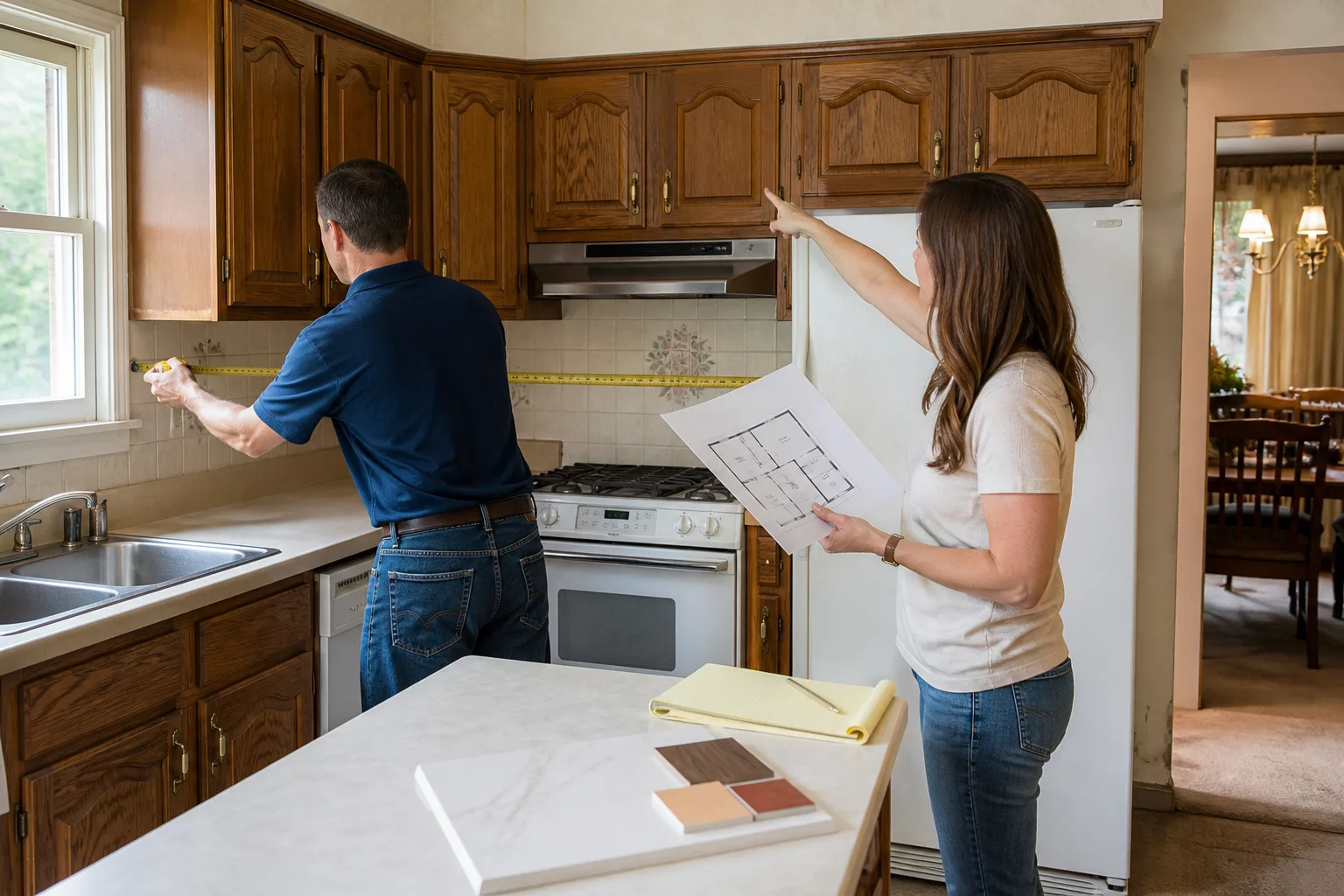
We’ve walked into enough Irving kitchens mid-project to see the pattern. The work that went wrong was rarely the work that looked hard. It was the task that looked like a weekend job and turned out to have a paper trail attached. So before you buy a single tool, sort every task in your kitchen into one of three buckets.
Bucket one: genuinely safe to DIY. Cosmetic work with no permit, no system contact, and a failure mode that’s contained. Painting cabinets. Swapping hardware. Installing open shelving into solid blocking. These tasks cost you time and maybe a spare weekend if you get them wrong, and nothing downstream breaks.
Bucket two: looks simple, carries risk. This is where most homeowners lose money. Replacing an outlet, hooking up a gas range, installing cabinets over an unlevel floor, patching in a new circuit for a microwave. Each of these looks like a screwdriver job and each one carries a permit, warranty, or insurance consequence.
Bucket three: requires a licensed professional. Gas line relocation, panel work, adding or moving circuits, structural wall removal, anything that requires an inspection to close out. In Texas, some of these aren’t a judgment call; the law draws the line for you, and we’ll get to that below.
The sorting test is simple: if the answer to “what happens if this fails?” includes the words insurer, inspector, or appraiser, it doesn’t belong in bucket one.
Tasks That Are Genuinely Safe to DIY
These are the jobs where a homeowner with patience and a decent YouTube tutorial genuinely saves money without taking on hidden exposure. We hand this list to Irving homeowners all the time when they ask what they can keep on their own plate.
- Painting cabinets. Degreasing, sanding, priming, and painting cabinet doors and boxes is a real skill but a contained one. Get the prep right and the finish holds. Get it wrong and you strip and redo, which costs time rather than money.
- Cabinet hardware swaps. Pulls and knobs are a one-afternoon job with a drill jig and a steady hand. The only risk is a mis-drilled hole, which is patchable.
- Open-shelf installation. Mounting shelves into studs or solid blocking is a genuine DIY task. Use a stud finder, anchor properly, and don’t hang anything heavy over a cooking surface where a fall would matter.
- Cosmetic surface swaps. Swap a dated backsplash for peel-and-stick or a removable tile sheet, replace a light fixture cover, change out a faucet trim kit if you’re comfortable with the shutoff.
- Painting walls and trim. Straightforward, and the failure mode is a second coat.
One caution on the faucet swap: trim kits are safe, but if you’re replacing the whole faucet body and the shutoff valves under the sink are older than the kitchen, stop and let a plumber look. A seized shutoff valve that fails when you turn it is a small task that becomes a water-damage job.
Tasks That Look Simple but Carry Permit or Warranty Risk
This is the bucket that costs homeowners the most, and it’s the one most guides skip past. Every task here has a visible version and an invisible version.
Electrical outlets and switches. Swapping a like-for-like outlet is within reach for many homeowners in theory. But the moment you add a circuit, move an outlet, or change the amperage, you’ve crossed into permitted work. Unpermitted electrical work discovered during a home sale can require an inspection and remediation before closing, and in some cases your homeowner’s insurance carrier can treat it as an exclusion in a claim.
Gas appliance connections. A homeowner connecting a gas range is a category Texas regulators look at closely, and for good reason. A slow leak behind a range isn’t obvious until it is, and the consequences are serious. This one belongs to a licensed plumber, full stop.
Cabinet installation over an unlevel floor. Cabinets look like boxes that screw to a wall. They’re actually a structural system that has to be shimmed, leveled, and anchored so that the countertop sits flat and the doors stay true for years. Install them over a floor with a slope and the countertop has to be templated around your mistake. We’ve re-set cabinet runs in Irving homes where the doors were racked within a year.
Countertop templating and installation. Stone counters – Cambria quartz, Silestone, Caesarstone – are templated to your actual cabinets and cut in a shop. This isn’t a DIY task; it’s a task that requires a fabricator and a template.
Texas Licensing Reality: What the Law Decides for You
Texas is a right-to-work state with a specific set of licensing rules, and a homeowner’s personal ability doesn’t override them. What matters for a kitchen remodel:
- Gas line work requires a licensed plumber. Relocating a gas line for a new range or cooktop, adding a gas connection for a new appliance, or capping a line is licensed work in Texas. A homeowner cannot legally perform it and the work cannot be signed off by anyone other than a licensed plumber.
- Electrical work requires a licensed electrician. Panel work, new circuits, and moving branch-circuit wiring require a licensed electrician and a permit through the local authority having jurisdiction. Like-for-like device swaps are generally not permitted work, but the moment you’re adding or relocating, you’re in licensed territory.
- Structural wall removal requires engineering and a permit. Removing any wall in a kitchen is a judgement call that belongs to a licensed professional who can confirm whether the wall is load-bearing. A wall that looks non-structural can carry a beam or a header; a wall that looks structural might be a partition. You need the permit either way.
What the penalty looks like: unpermitted work discovered during a home sale surface in a buyer’s inspection, and the seller is typically on the hook for bringing the work to code or disclosing it. In Irving, a reopened permit on an unpermitted electrical or gas change can stall a closing and cost more than the original job. If you’re planning a remodel and want to know which permits apply to your address, an General Contractor in Irving can tell you before you start.
Can I Do My Own Demo? The Asbestos Question
Homeowner demo can save real money – a few hundred to a couple thousand dollars on a full gut. The honest answer is that it’s sometimes fine and sometimes the most expensive shortcut in the project. The determining factor is the age of the house and what’s behind the drywall.
Irving has a substantial stock of homes built before 1980. In those homes, asbestos-containing materials turn up in places homeowners don’t expect: vinyl floor tile and the mastic under it, popcorn ceiling texture, joint compound in older drywall, and pipe insulation. Disturbing those materials without testing first creates a cleanup problem that costs far more than the demo savings, and it’s a health issue for anyone in the house during the work.
Before you swing a hammer, do this:
- Check the build date on your Irving property records. If it predates 1980, assume asbestos is possible until testing says otherwise.
- Have a sample tested by an accredited lab before demo on flooring, ceiling texture, or joint compound. The test is inexpensive and takes a few days.
- If asbestos is present, use a licensed abatement contractor. This isn’t a bucket-two task; it’s a legal and health requirement.
- If the materials test clean, homeowner demo of drywall, cabinets, and flooring is reasonable, with proper dust containment and disposal.
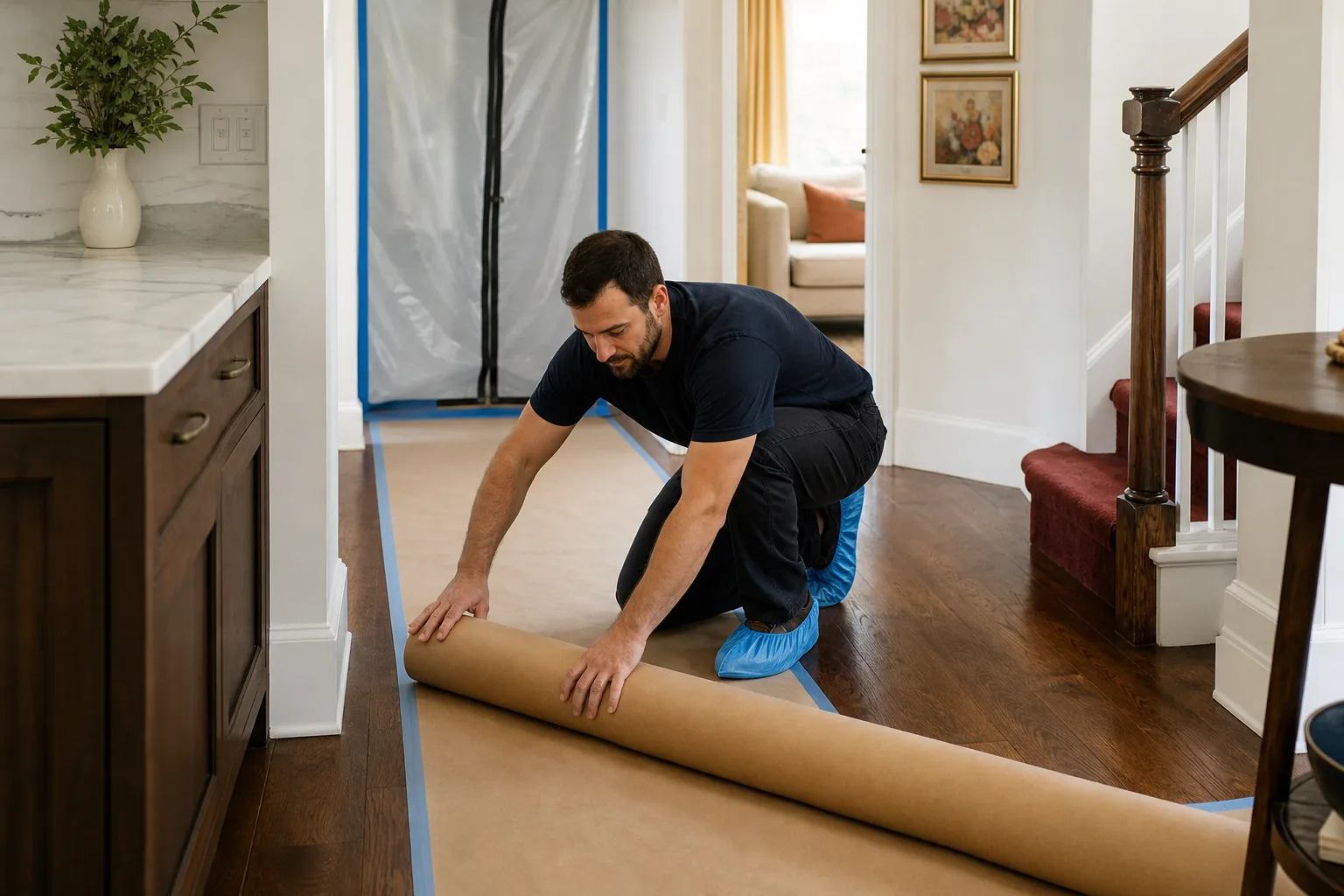
One more demo-adjacent note: if you’re pulling cabinets yourself, make sure the gas and electrical to the range are shut off by the appropriate licensed trade first. We’ve seen homeowners start demo before the gas was capped, which is exactly the kind of shortcut that ends in a call to the fire department.
The Hidden Cost Math of DIY Gone Wrong
The reason DIY math so often fails is that the calculation usually stops at the cost of the materials versus the cost of the hire. It doesn’t account for the redo. Here’s what that looks like with real numbers, based on what we see in Irving.
- DIY tile backsplash gone wrong. Materials for a modest backsplash run $300 to $600. If the tile isn’t set to a flat substrate – cement board substrate (the moisture-resistant layer behind your tile) – the tile fails or the grout cracks within a year. A professional tear-out and redo runs $1,200 to $2,500 in labor and materials on top of what you already spent. The total is $1,500 to $3,100 for a job that would have cost $900 to $1,800 hired out.
- Cabinet install over an unlevel floor. A DIY cabinet set that racks can force a countertop to be re-templated. Re-templating and re-cutting a stone counter runs $400 to $900 plus the cost of the original counter if it can’t be salvaged.
- Unpermitted electrical. A permit pulled retroactively and an inspection to close it out can run $500 to $1,500 depending on scope, plus the cost of any corrections. In a sale, the cost of a stalled closing can dwarf that.
- Gas connection. This isn’t a cost-math problem. It’s a safety problem, and the range of outcomes doesn’t have a price attached.
When a homeowner calls us after a DIY tile job has failed, the conversation is usually the same: they saved $600 on the install and are now spending $2,000 to fix it. That’s the hidden cost math in one sentence. If you’re weighing a Kitchen Remodeling in Irving, the honest comparison includes the redo cost, not just the labor rate.
A Decision Framework You Can Apply in Five Minutes
You don’t need a spreadsheet to sort a task. Three questions do it. If the answer to any one is yes, hire it out.
- Does it require a permit? If the task requires an inspection to close out, it’s a professional task. The permit is the signal that the work has a paper trail, and the paper trail is what protects your home sale and your insurance.
- Does it touch a system? Gas, electrical, structural, or plumbing supply and drain lines. Systems interact; a change in one can fail in another. A new circuit for a microwave is an electrical task that changes how the kitchen’s load is distributed.
- Does the failure mode damage adjacent work? A bad paint job fails in place. A bad tile job fails into the substrate and the cabinet run. A bad cabinet install fails into the countertop. If the failure reaches beyond the task itself, it’s a hire-out.
There’s also a fourth, softer question: is this task something you’ll enjoy doing? A homeowner who genuinely enjoys painting cabinets and has the patience for prep does a fine job. A homeowner who hates it will rush the prep and the finish will fail. That’s not a skill issue; it’s a temperament one, and it’s real.
What Makes Irving Kitchens Different
Irving has a specific housing stock and climate that shapes which DIY tasks fail and which hold up. The pre-1980 homes in neighborhoods like Old Irving and the historic stretches near downtown mean asbestos testing is a real prerequisite before demo, not a theoretical one. The newer builds in Las Colinas and Valley Ranch have different issues – open floor plans that make structural walls harder to identify and MDF cabinet boxes that don’t tolerate shimmed installs the way solid wood does.
The climate matters too. Irving summers put a lot of expansion stress on exterior walls and adjacent kitchen cabinetry, and a DIY cabinet install that’s tight in January can rack by August. We regularly see cabinet doors that won’t close flush in the fall on installs that were fine in the spring. The lesson is to shim and anchor to the level the box actually needs, not the level it looks like on install day.
If your kitchen is part of a larger project – a kitchen and bath remodel at the same time, for example – the permit and inspection scope grows, and we’d rather flag that before you start. A Bathroom Remodeling in Irving project running concurrently will usually share plumbing rough-in and inspection windows with a kitchen, which changes the sequencing. You can start with the Penhallow Remodeling Irving home page if you want a picture of how we scope a full-home project before any work begins.
Common Mistakes to Avoid
- Starting demo before testing for asbestos. In Irving’s pre-1980 homes, this is the mistake that turns a $500 demo savings into a $4,000 to $8,000 abatement and remediation. Test first, always.
- Swapping outlets without checking the permit threshold. A like-for-like swap is one thing; adding a circuit for a new microwave is another. Homeowners routinely blur the two and end up with unpermitted work that surfaces during a sale.
- Installing cabinets before checking the floor is level. A floor with a 1/4-inch slope across a cabinet run will rack the doors within a year. Level first, install second.
- Hooking up a gas range yourself because “it’s just a connection.” Texas law requires a licensed plumber. This is the mistake with no margin for error.
- Pulling a wall without knowing if it’s load-bearing. Irving’s newer open-plan homes sometimes have structural walls that look like partitions. Get it confirmed before you touch it.
- DIYing the tile over a bad substrate. The tile is the visible layer; the cement board substrate (the moisture-resistant layer behind your tile) is what holds. Skipping the substrate is the most common reason a DIY backsplash cracks within a year.
- Assuming a handyman covers permitted work. Many states and cities require a licensed trade for gas, electrical, and structural. A handyman who “knows how” is not the same as a licensed plumber or electrician for legal and insurance purposes.
See the difference
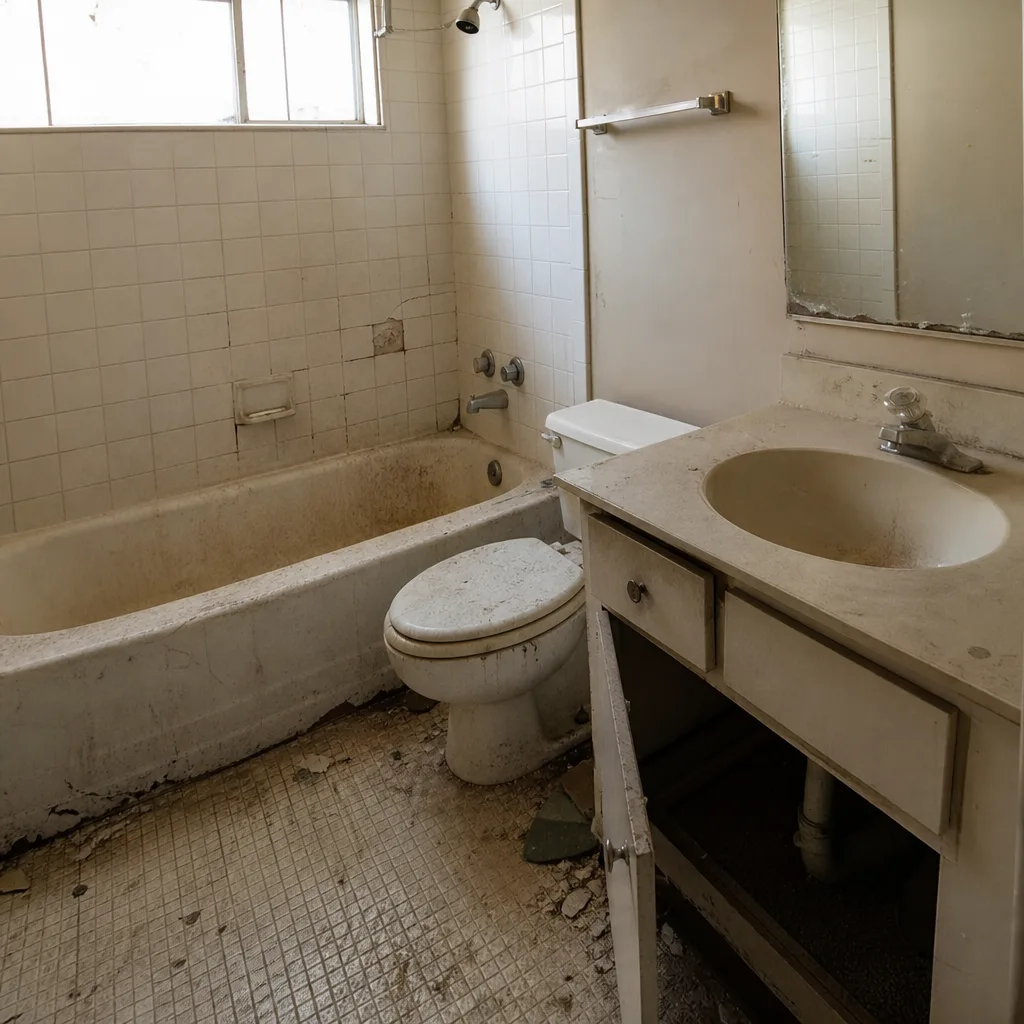 Before
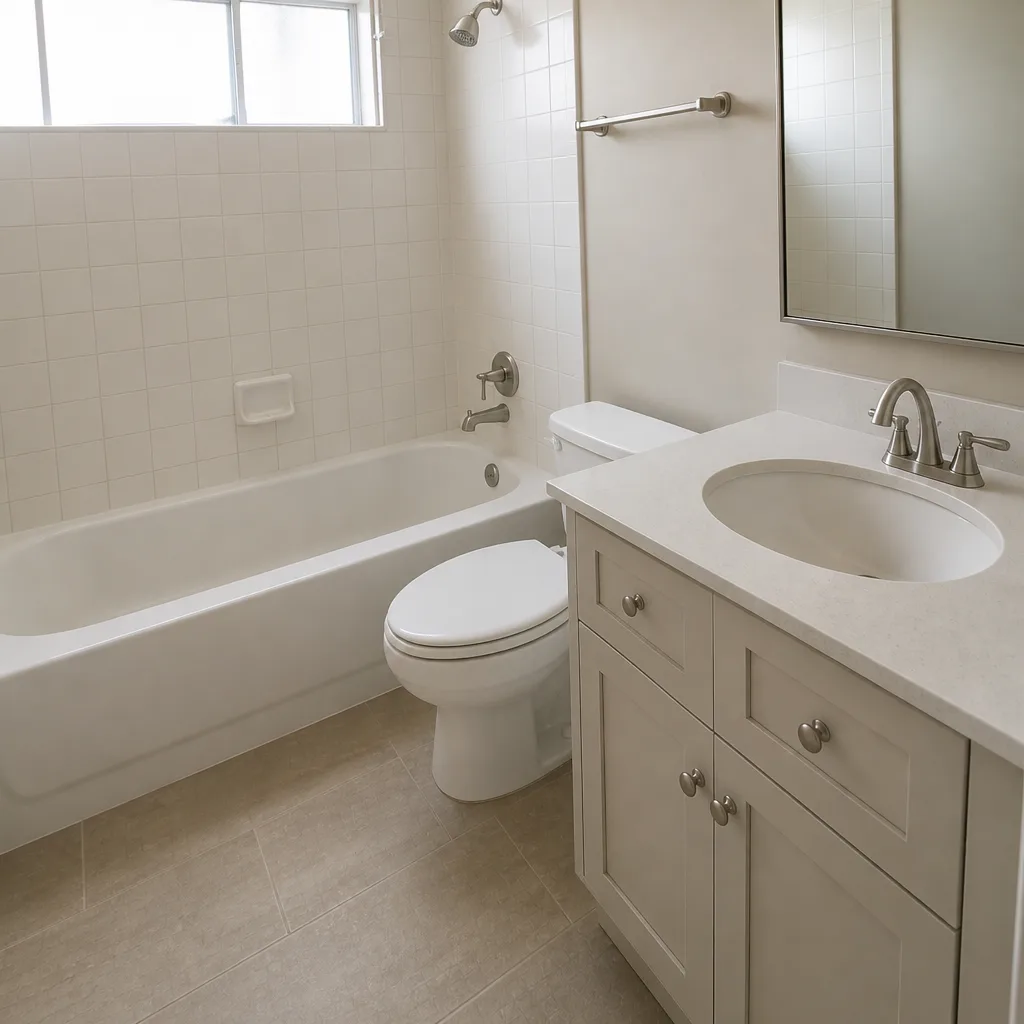 After
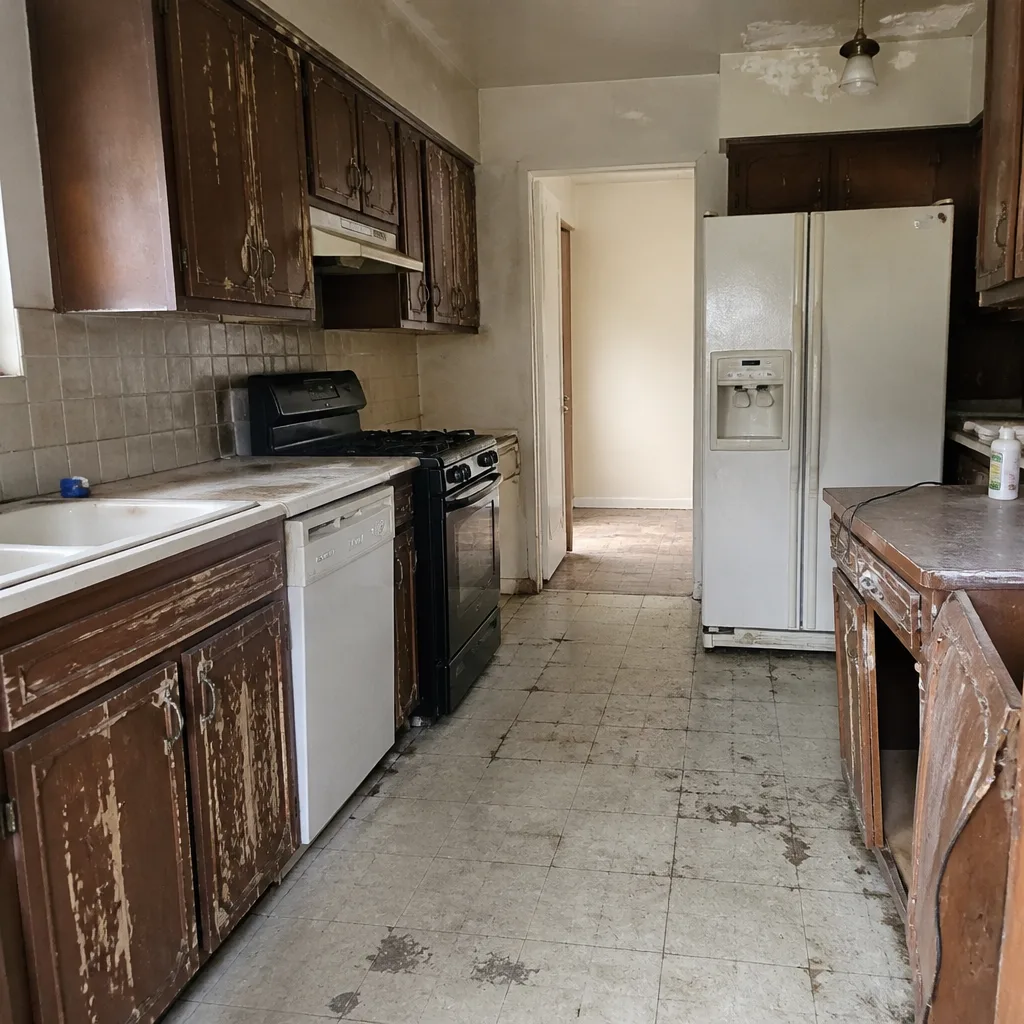 Before
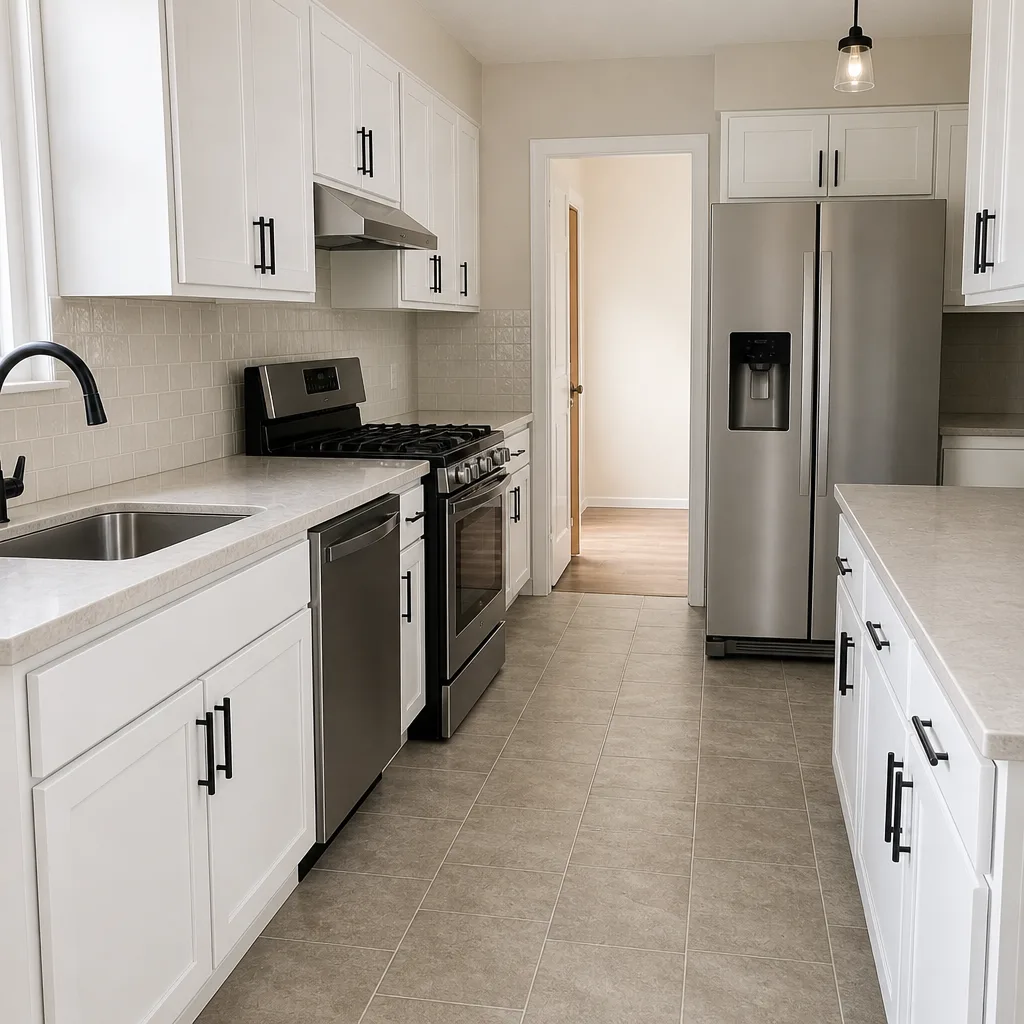 After
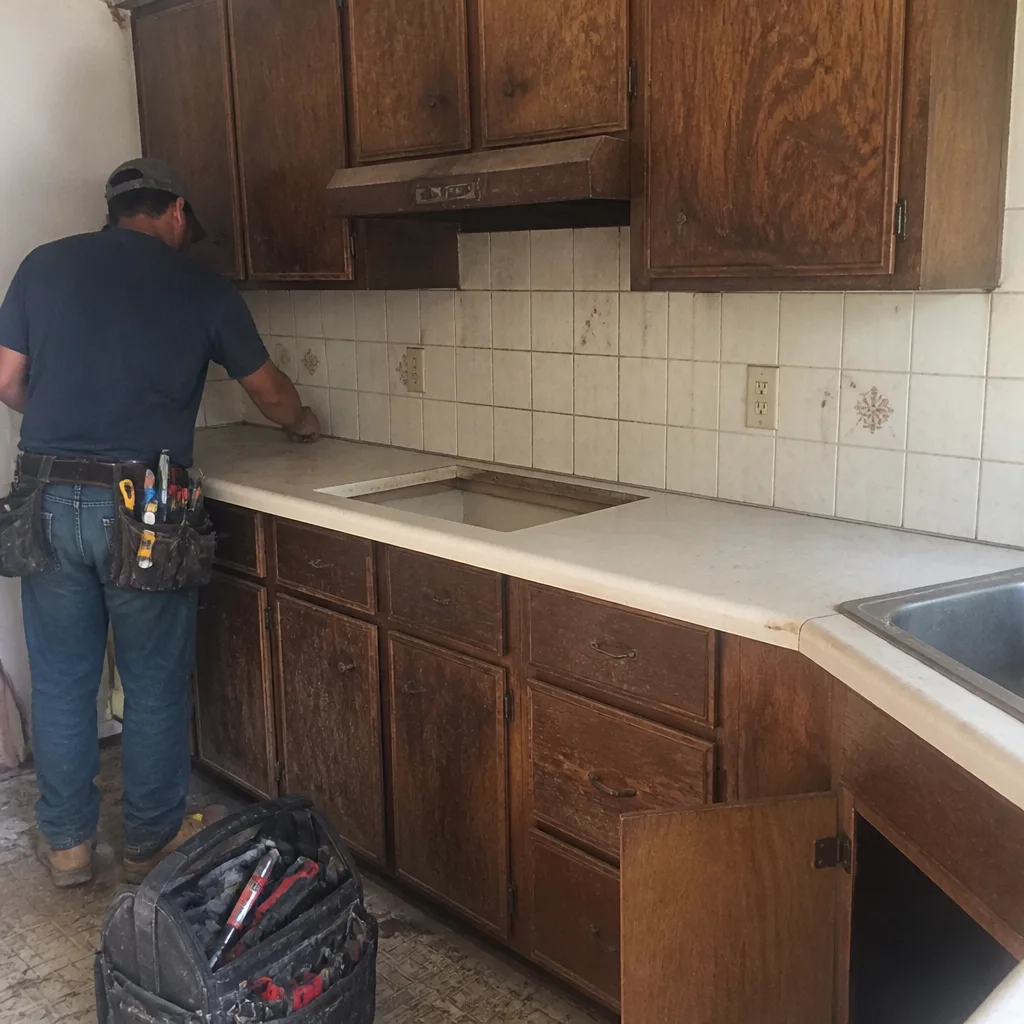 Before
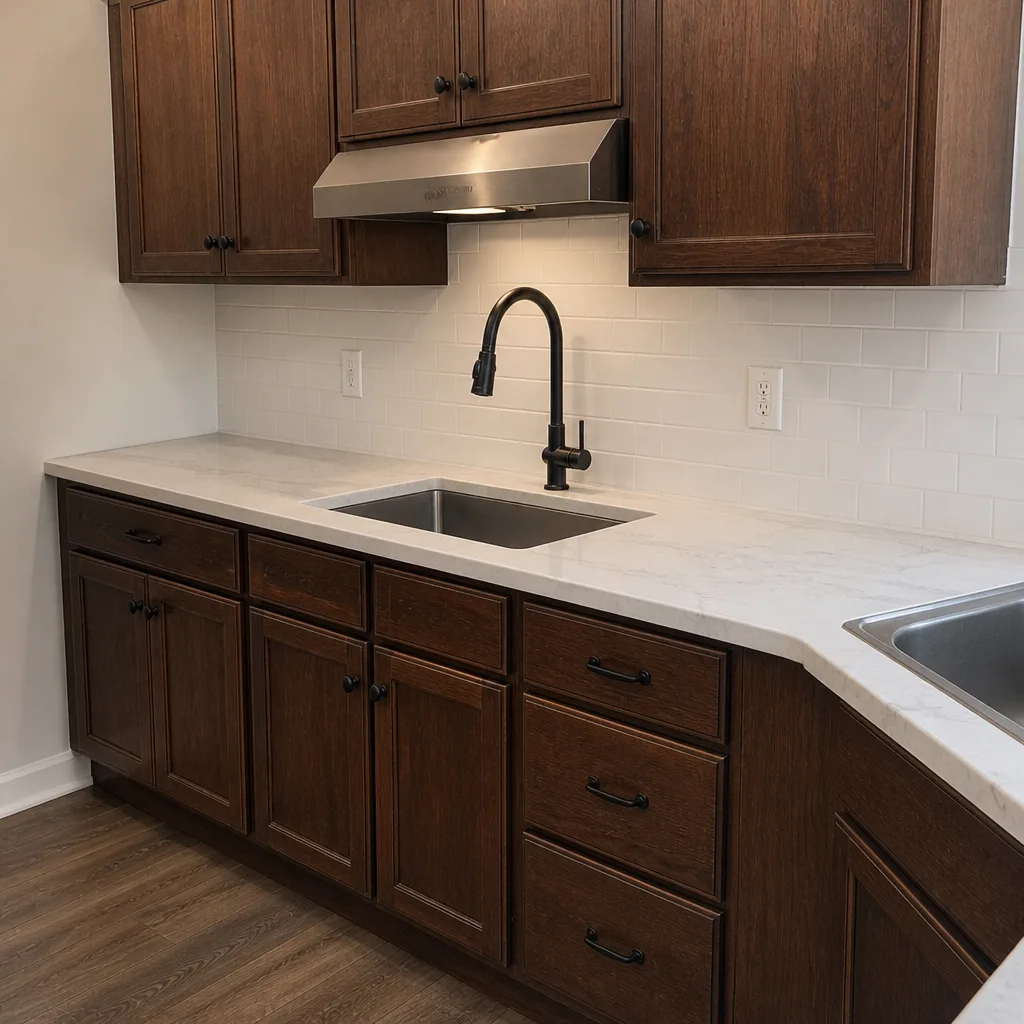 After
When to Call a Professional
Call a professional when the task requires a permit, touches a gas, electrical or structural system, or has a failure mode that damages the work around it. In practice, that means gas line relocation, panel work, new or moved circuits, structural wall removal, stone countertop installation, and any cabinet install over a floor you haven’t confirmed is level. Add asbestos abatement if your Irving home predates 1980 and you’re disturbing flooring, ceiling texture, or joint compound. And call when you’ve already done the DIY and it failed – the redo math usually favors a professional the second time. Penhallow Remodeling Irving offers free estimates in Irving – call (844) 320-5939. Every project gets a written price before any work starts, a 365-Day Done Right Promise on the work, and background-checked, uniformed technicians on every job.
Frequently Asked Questions
You can safely DIY painting cabinets, swapping cabinet hardware, installing open shelving into solid blocking, painting walls and trim, and light cosmetic surface swaps like peel-and-stick backsplash or a faucet trim kit. These tasks don’t require a permit, don’t touch a gas, electrical or structural system, and fail in a way that’s contained to the task. Call (844) 320-5939 for a free estimate on anything outside that list.
Like-for-like device replacements generally do not require a permit, but adding a circuit, moving an outlet, or changing amperage does. The Irving authority having jurisdiction issues permits for electrical work that adds or relocates wiring, and the permit is what protects your insurance and your home sale. If you’re unsure which category your work falls into, an electrician or general contractor can tell you in minutes. Call (844) 320-5939 for a free estimate.
Sometimes, but only after asbestos testing if the home predates 1980. Asbestos-containing materials show up in vinyl floor tile, mastic, popcorn ceiling texture, joint compound, and pipe insulation in older Irving homes, and disturbing them without testing creates a cleanup problem that costs far more than the demo savings. Have samples tested by an accredited lab before you swing a hammer. Call (844) 320-5939 if you’d like a scoping walkthrough first.
Hiring is often cheaper once you account for the redo cost. A DIY tile job saves $600 to $1,200 on labor but costs $1,200 to $2,500 to tear out and redo if the substrate is wrong, which is a net loss versus hiring out from the start. Painting cabinets is the one task where DIY savings almost always hold. Call (844) 320-5939 for a written price you can compare against the DIY math.
Gas line work requires a licensed plumber in Texas, electrical panel work and new or relocated branch circuits require a licensed electrician, and structural wall removal requires engineering and a permit. Homeowner ability does not override these requirements. Unpermitted work discovered during a home sale can stall a closing and require remediation before the sale goes through. Call (844) 320-5939 for a free estimate on permitted work.
No. Gas and electrical work that requires a permit must be performed by a licensed plumber or electrician, and a handyman is not a substitute for legal and insurance purposes. A handyman can handle cosmetic tasks within the safe-DIY list, but gas connections, panel work, and new circuits are licensed work in Texas. Call (844) 320-5939 and we’ll tell you which trade your project needs.
The Bottom Line
The DIY decision in a kitchen remodel is a consequence decision, not a skill decision. Paint your cabinets, swap your hardware, hang your open shelves. But draw a hard line at anything that requires a permit, touches gas, electrical or structural systems, or fails in a way that damages the work around it. In Irving, that line is set by Texas licensing law and by the age of your home – pre-1980 builds need asbestos testing before demo, and the electrical and gas rules don’t bend to homeowner ability. The math usually favors hiring out the risky tasks the first time. It almost always favors it the second. Call Penhallow Remodeling Irving at (844) 320-5939 for a free estimate, with a written price before any work starts.
Written by the team at Penhallow Remodeling Irving.